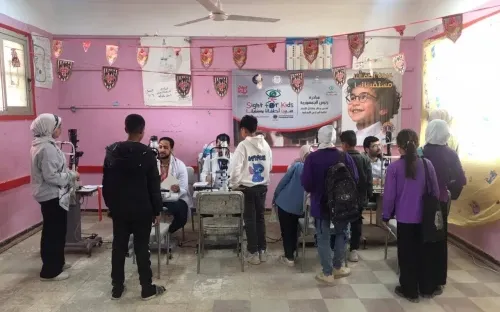
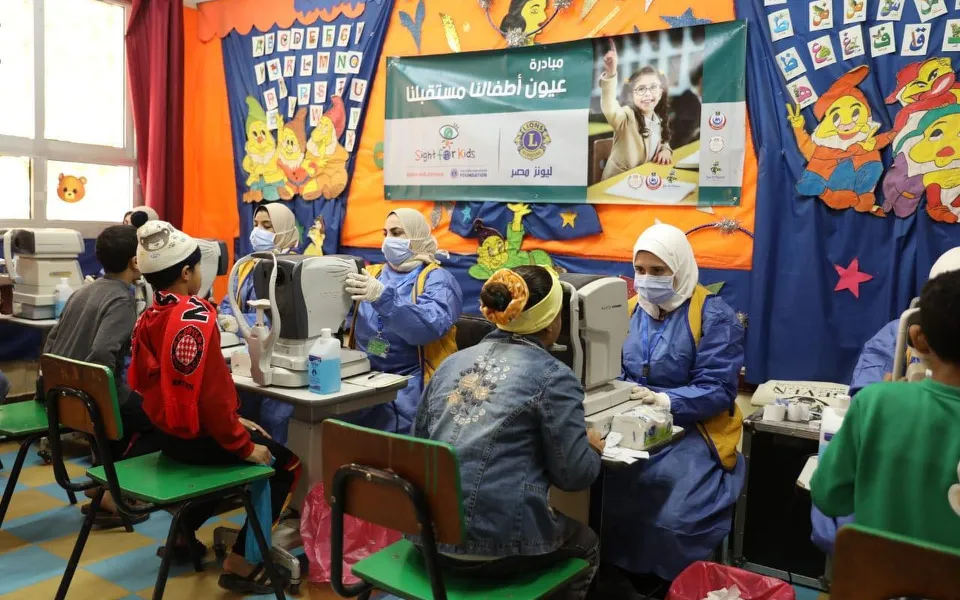
Vision screening at school
- Visual acuity test for every pupil
- Equipped medical teams
- Free of charge

 Screening and early detection
Free eye tests for primary school pupils, with free glasses and treatment
Last updated: 9 November 2026
6 to 12 years
Male and female
مصري الجنسية
Find the nearest primary care unit that offers the service, and its working hours.
Nearest unit offering the service1. Difficulty concentrating: if your child finds it hard to concentrate while reading or during activities that require visual focus, there may be a vision problem
2. Change in eye behavior: if you notice any changes in eye behavior, such as the eyes turning while looking or abnormal eye movement, this may indicate an eye problem
3. Blurred vision: if your child is unsure about seeing things clearly or complains of blurry vision, there may be a vision problem
4. Eye pain: if your child has eye pain or feels constant itching or redness, there may be inflammation or an infection in the eye
5. Sudden stopping of using an eye: if you notice that your child has suddenly stopped using one eye or avoids using it, something may be bothering them in that eye
If you notice any of these signs, you should take your child for a medical examination by an ophthalmologist to check for and diagnose any problem they may have
1. Regular eye check-ups: it is recommended to bring your child for a regular eye check-up with an ophthalmologist, so that they can check the health of the eye and detect any vision problems early
2. Eye hygiene: keeping the eyes clean. Explain to your child the importance of washing hands well before touching their eyes, and avoiding excessive rubbing of the eyes. It is also recommended to teach them the correct way to clean the eye if they feel pain or there is any foreign body in it
3. Reducing continuous screen time: the long time children spend in front of screens (such as television or smartphones) may affect their eye health. Try to set a specific time for use and encourage them to take regular breaks to rest their eyes
4. Protection from the sun's rays: use sunglasses to protect your child's eyes from harmful ultraviolet rays when exposed to direct sunlight, especially during the summer
5. Healthy nutrition: make sure to provide your child with a healthy diet that includes fruits, vegetables and foods rich in vitamins A, C and E and omega-3 fatty acids; these nutrients are beneficial for eye health
Positive results are referred to the linked clinics to be treated and followed up according to updated protocols prepared by professors of ophthalmology
Initial screening is carried out by the school teams throughout the school year, and positive cases are treated and followed up all year round on an ongoing basis
All primary school pupils (6–12 years) in rural and urban areas in public, private, community, intellectual education and Al-Azhar schools.