
At the UN General Assembly meetings, the Ministry of Health affirms the Egyptian State's commitment to taking all measures to combat stroke
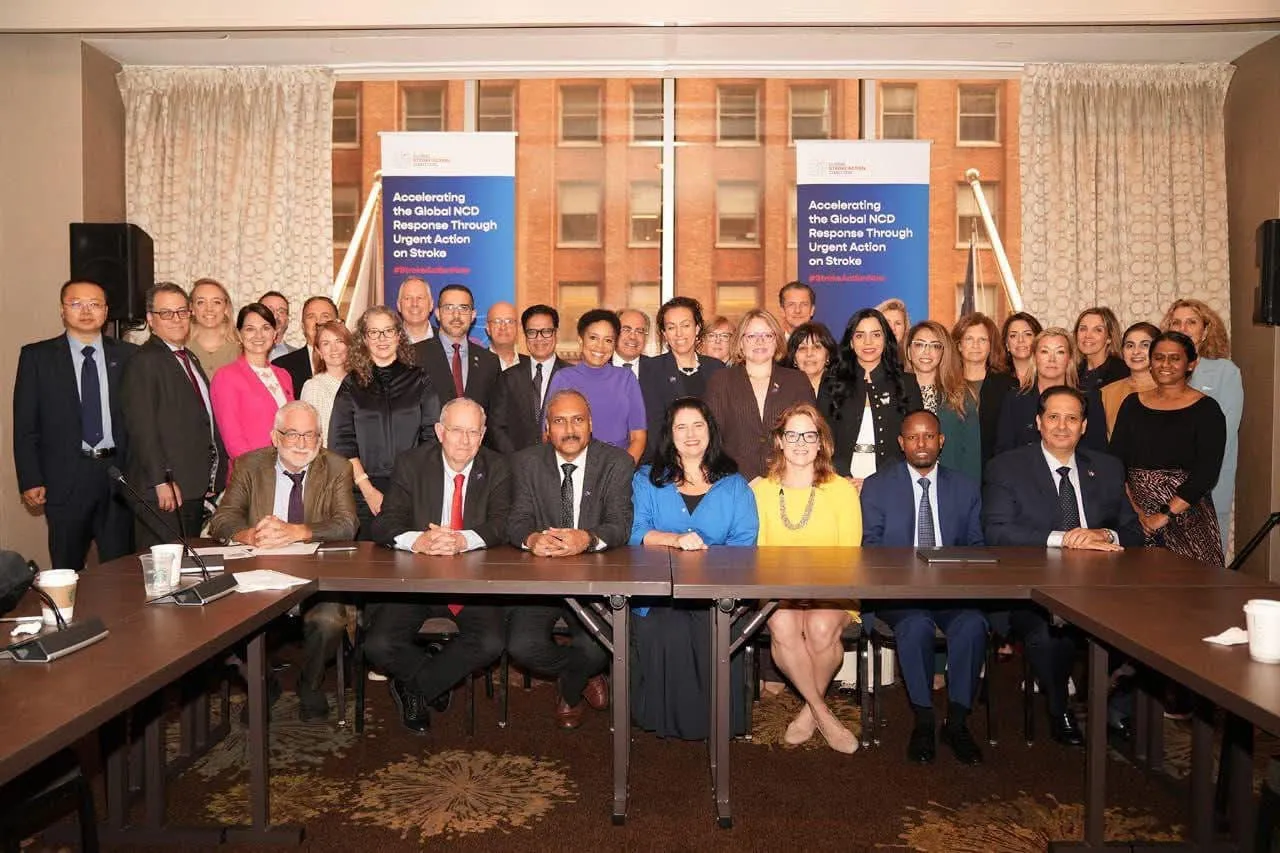
During the meetings of the United Nations General Assembly..
The Ministry of Health affirms the Egyptian State's commitment to taking all measures to combat stroke
The Ministry of Health and Population affirmed that Egypt has renewed its serious commitment to combating stroke as one of its health and development priorities, based on the principle that every minute saved in stroke treatment means saving a life free of disability and avoiding the heavy cost of long-term treatment and continuous care.
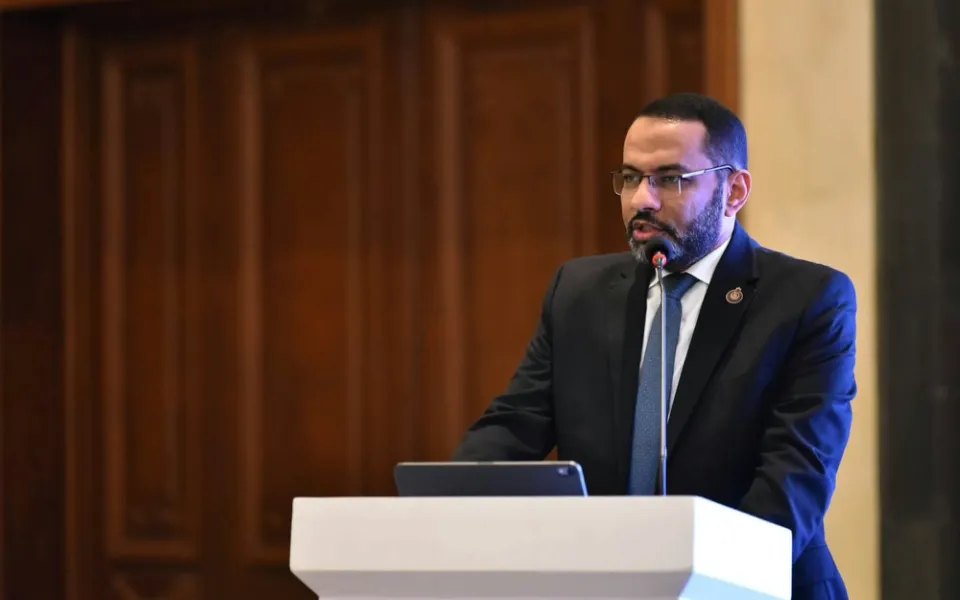
This came in a speech delivered by Dr. Mohamed Hassany, Assistant Minister for Projects and Public Health Initiatives, on behalf of Dr. Khaled Abdel Ghaffar, Deputy Prime Minister and Minister of Health and Population, at a session entitled: "Every Minute Makes a Difference.. Accelerating the Global Response to Noncommunicable Diseases through Urgent Action on Stroke", held on the sidelines of the United Nations General Assembly meetings in New York from 22 to 30 September.
Dr. Hossam Abdel Ghaffar, official spokesperson for the Ministry of Health and Population, explained that investing in stroke care is both a health and an economic priority, as it helps reduce disability rates, ease the burden on families and preserve the productivity of the workforce.
In his speech, Dr. Mohamed Hassany explained that stroke represents a health and development crisis, as it is the leading cause of long-term disability, noting that incidence rates are linked to the prevalence of multiple risk factors, including high blood pressure at 30%, obesity and overweight at up to 70%, high cholesterol at 38.6%, and diabetes at 15.5%. He pointed out that the challenge is not limited to health alone but extends to the economic and social spheres, as chronic diseases in Egypt lead to a 6% drop in employment rates and a 19% decline in the total workforce, equivalent to about 12% of gross domestic product.
Dr. Hassany reviewed the most prominent efforts made by the Egyptian State to confront this challenge, noting that the Ministry of Health and Population has established 40 specialised stroke treatment centres, in addition to 26 centres at Egyptian universities, alongside the treatment services provided by the private sector, contributing to building an integrated and harmonious system of patient care. Diagnostic capacity has also been expanded through the provision of CT and MRI scanners to ensure therapeutic intervention as quickly as possible, in addition to developing neuro-catheterisation laboratories to carry out precise interventions such as mechanical thrombectomy.
He noted that this year the Ministry of Health launched the National Stroke Network, which aims to link all centres involved in treatment and rehabilitation across the government, university, military and non-governmental sectors under a unified national umbrella, led by a select group of experts in neurology, emergency medicine and radiology, to ensure that treatment protocols are updated and healthcare standards are unified in line with the latest international recommendations.
At the end of his speech, Egypt's representative called on the international community to strengthen cooperation and the exchange of expertise to confront this global challenge, affirming that Egypt stands fully ready to share its expertise and successful experiences and to work side by side with international partners to accelerate the global response to noncommunicable diseases through urgent action on stroke, saying: "Stroke can be prevented, treated and recovered from if we act together and without delay, for every minute makes a difference."