
Dr. Khaled Abdel Ghaffar: Eliminating mother-to-child transmission of diseases by 2030 is a global health priority
Dr. Khaled Abdel Ghaffar: Eliminating mother-to-child transmission of diseases by 2030 is a global health priority
==================
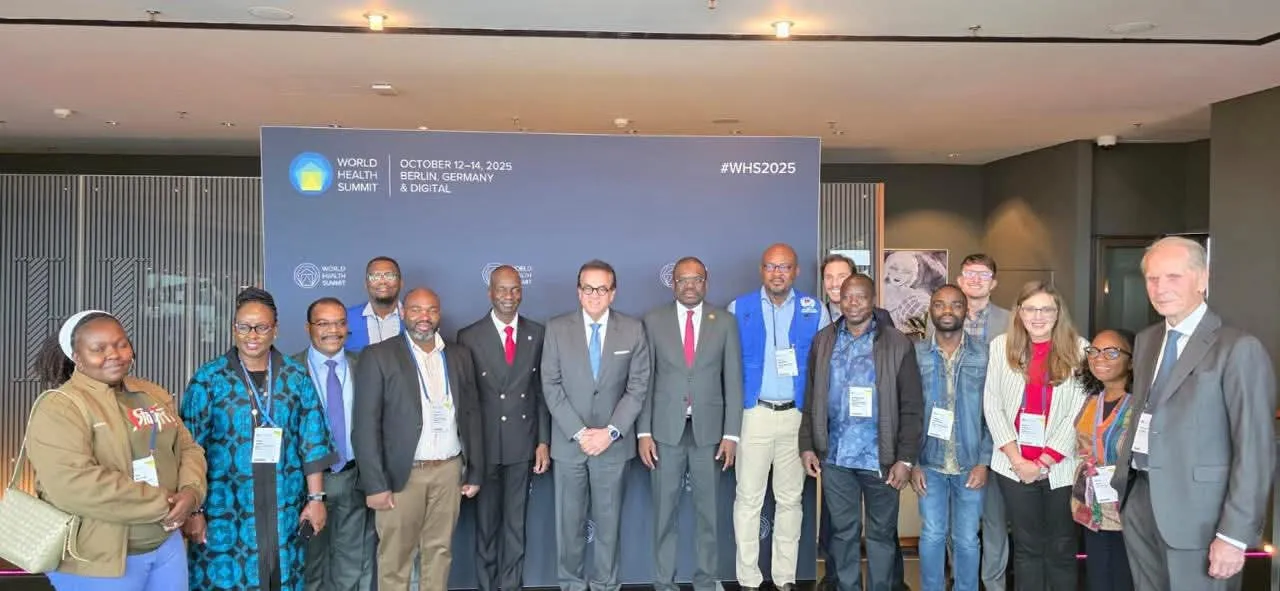
Dr. Khaled Abdel Ghaffar, Deputy Prime Minister for Human Development and Minister of Health and Population, took part in a high-level panel discussion entitled "Closing the Gaps: Civil Society Leadership to Eliminate Mother-to-Child Transmission of Human Immunodeficiency Virus (HIV), Hepatitis B and Syphilis by 2030", on the sidelines of the World Health Summit 2025 held in Berlin from 12 to 14 October.
In his speech, the Minister stressed that eliminating mother-to-child transmission of HIV, hepatitis B and syphilis by 2030 is a global health priority. He explained that this goal is not merely a health aspiration but a humanitarian and moral duty aimed at ensuring an infection-free start in life for every child and providing safe and dignified healthcare for mothers during pregnancy and childbirth.
He pointed to the vital role of civil society organisations as an essential partner in achieving this vision, as they play a key role in reaching the most vulnerable groups, confronting social stigma and combating misinformation. He also affirmed that these organisations help expand the scope of testing, increase health awareness and provide psychological and social support, making it possible to reach communities that health systems find difficult to serve.
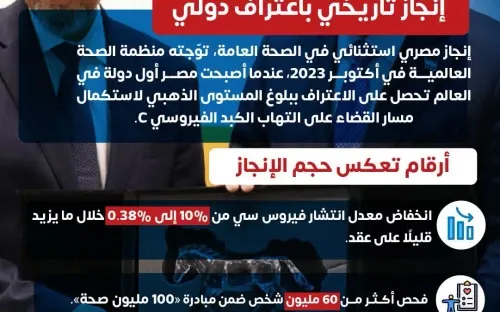
In the course of his remarks, Dr. Khaled Abdel Ghaffar reviewed the tangible achievements Egypt has made in this field, as the State has made health a central pillar of its national development agenda, linking it to human capital development, education and social protection. Among the most prominent of these efforts is the 100 Million Healthy Lives initiative, one of the largest medical screening programmes in the world, which has screened more than 60 million citizens for hepatitis C and noncommunicable diseases and provided treatment to more than 4 million people, prompting the World Health Organization to praise Egypt as a leading country on the path to eliminating hepatitis C.
He added that Egypt has succeeded in reducing the prevalence of hepatitis B among children under five to less than 1%, thanks to the State's commitment to routine immunisation programmes and the timely birth dose, along with comprehensive national coverage. The Ministry also continues to develop health infrastructure, modernise facilities, expand laboratory capacity and provide medicines and advanced technologies in all governorates, with a focus on intensive care units and early diagnosis for newborns.
He affirmed that Egypt is fully aligned with the global triple elimination agenda led by the World Health Organization, the Joint United Nations Programme on HIV/AIDS (UNAIDS) and UNICEF. Future priorities include integrating comprehensive screening for HIV, hepatitis B and syphilis into antenatal care services, providing immediate treatment and prevention, ensuring the vaccination of newborns, strengthening surveillance and data systems, and expanding health education to combat stigma and encourage early testing.
He noted that the partnership between government, civil society and international partners is the cornerstone for achieving these goals, affirming Egypt's commitment to working with international partners to integrate maternal and child health programmes with the control of infectious diseases, to ensure that no woman is left out because of her geographical location or social circumstances.
The Minister concluded his speech by affirming that eliminating mother-to-child transmission of infection is an achievable goal that reflects the essence of the health mission of protecting life and promoting health equity. He said: "Together, governments, civil society and international partners can turn this vision into reality, ensuring a healthy start for every child."
The session brought together a select group of actors in the fields of public health, policy and community advocacy, including civil society organisations, the national organisation of people living with hepatitis B and partner networks concerned with combating infectious diseases, as well as international agencies such as the World Health Organization, the Joint United Nations Programme on HIV/AIDS, UNICEF and the United Nations Population Fund, and regional institutions such as the African Union Commission and the Africa Centres for Disease Control and Prevention, in addition to government representatives, health professionals and researchers specialising in maternal health and infectious disease control.