
WHO: The Presidential Initiative for Women's Health is a catalyst for fighting cancer worldwide
Youm7
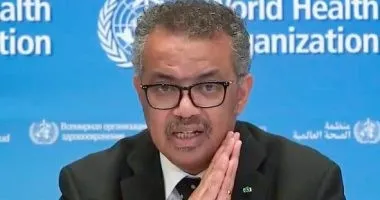
The World Health Organization praised the Presidential Initiative to Support Women's Health during a panel discussion between the World Health Organization, the Ministry of Health and Population and the head of the National Committee of the Presidential Initiative for Women's Health.
The World Health Organization said that the Presidential Initiative to Support Egyptian Women's Health is a beacon of hope and progress, and has put in place a comprehensive strategy to promote the early detection of women's cancers and treatment solutions for them, adding that as we come together in this mission we recognise the importance of international cooperation to achieve this noble goal.
It added that the distinguished initiative to support women's health is a catalyst for advancing cancer-control strategies at the global level, by bringing together the policies of eminent scientists and industry leaders worldwide, and in the meantime we are dynamically opening the field to seek strategic researchers whose echo resonates far beyond our borders.
For its part, the Ministry of Health and Population stressed that breast cancer is the most common and the deadliest cancer affecting women, causing about 49,000 deaths every year according to the classifications of the International Agency for Research on Cancer; at the same time, uterine cancer causes nearly 10,000 deaths in total in the Region. In addition, there is a sharp increase in the number of women suffering from cancer in the Region.
These diseases are compounded in the Region by a set of factors, including the limited resources available to the health sector, the lack of essential innovations in health care, limited community awareness, and social barriers. These factors contribute to delayed diagnosis, which affects outcomes.
It added that in order to combat women's cancers, we must rely on a sound health structure, including basic infrastructure and model training in cancer care, in order to be able to allocate sustainable funding.
For her part, Dr. Rana Hajjeh, Director of Programme Management at the Regional Office for the Eastern Mediterranean, said: Egypt has taken important steps to respond to and confront this alarming warning. The Presidential Initiative to Support Egyptian Women's Health is a national programme adopted by the Ministry of Health and Population in Egypt to raise the level of early detection and treatment management of women's cancers. The initiative also promotes international cooperation, seeking to bring together scientists and global policy-makers by providing a platform for exchanging expertise and advancing cancer-control strategies around the world.
She said that over four years the initiative has supported women's health and achieved remarkable results, as it found that the proportion of women with breast cancer diagnosed at late stages could reach a notable rate of 20 to 70%, explaining that the time gap between detecting cases at their early stages and diagnosis was 49 days, which surpasses the target set by the World Health Organization of 60 days.
The Organization said that breast cancer screening is an economic reform and a life-saving value in our battle against cancer.
This initiative aims to combat women's cancers in the region, particularly in low- and middle-income countries. Its opportunity and its useful, replicable concept have received appreciation and praise. In the future, we aim to consolidate cross-border partnerships, including providing comprehensive and appropriate care for every woman, and setting a new standard in the field of women's health.
Dr. Hesham El-Ghazaly, head of the National Committee of the Presidential Initiative for Women's Health, affirmed that the discussions held during the meeting addressed the following points:
1. Highlighting the experiences and success stories achieved in other countries of the Eastern Mediterranean Region in combating cancer and its causes.
Social considerations relating to women, with a focus on how the private sector can work in synergy with comprehensive social development in Egypt and the wider Region, which offers diverse insights as well as the broader impacts of health interventions.
2. International and regional integration, in particular strengthening and consolidating cooperation among the various international and regional organisations in the field of cancer control, to achieve effective integration.
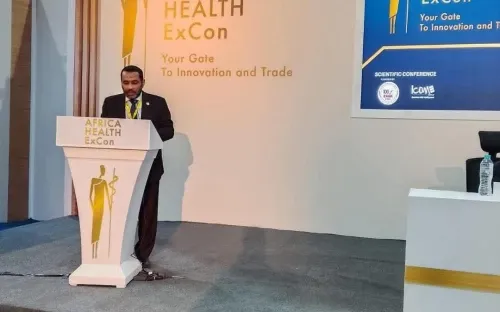
A number of prominent experts took part in the main presentations and panel discussions, including from the Ministry of Health, as well as high-level representatives of the World Health Organization, the International Atomic Energy Agency and the International Agency for Research on Cancer.
The meeting served as a key platform for bringing together the main figures in the fight against women's cancers, in order to exchange the collective knowledge and expertise of health authorities and leading international organisations in the Region.
The highlights of this event include developing enhanced models to serve as a global example for cancer control, and achieving a better understanding of the social impacts of such presidential initiatives.