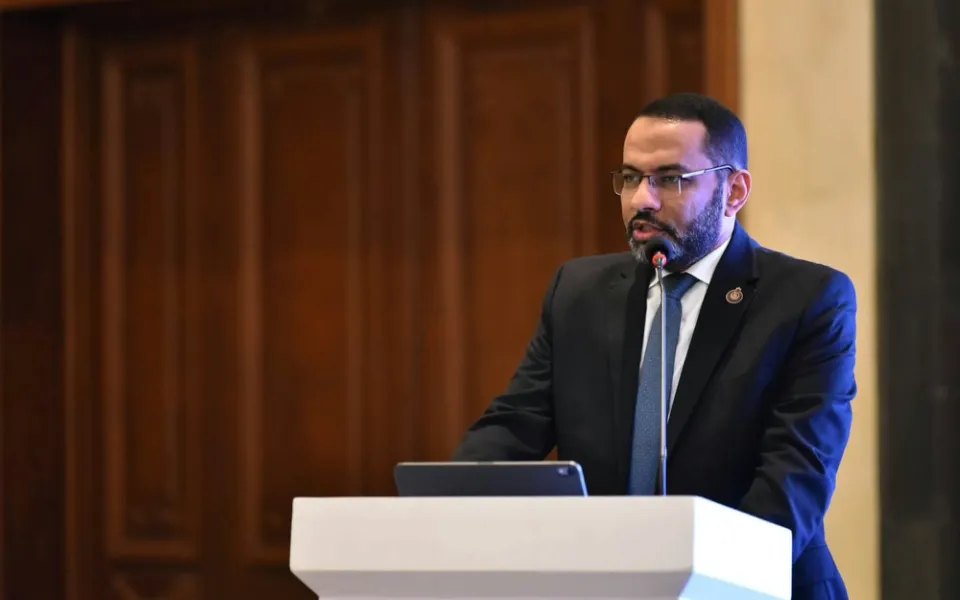

As part of the third edition of the Global Congress on Population, Health and Development 2025... Dr. Mohamed Hassany, Assistant Minister of Health for Public Health Projects and Initiatives, attended a panel discussion titled "Stroke Treatment at Scale"
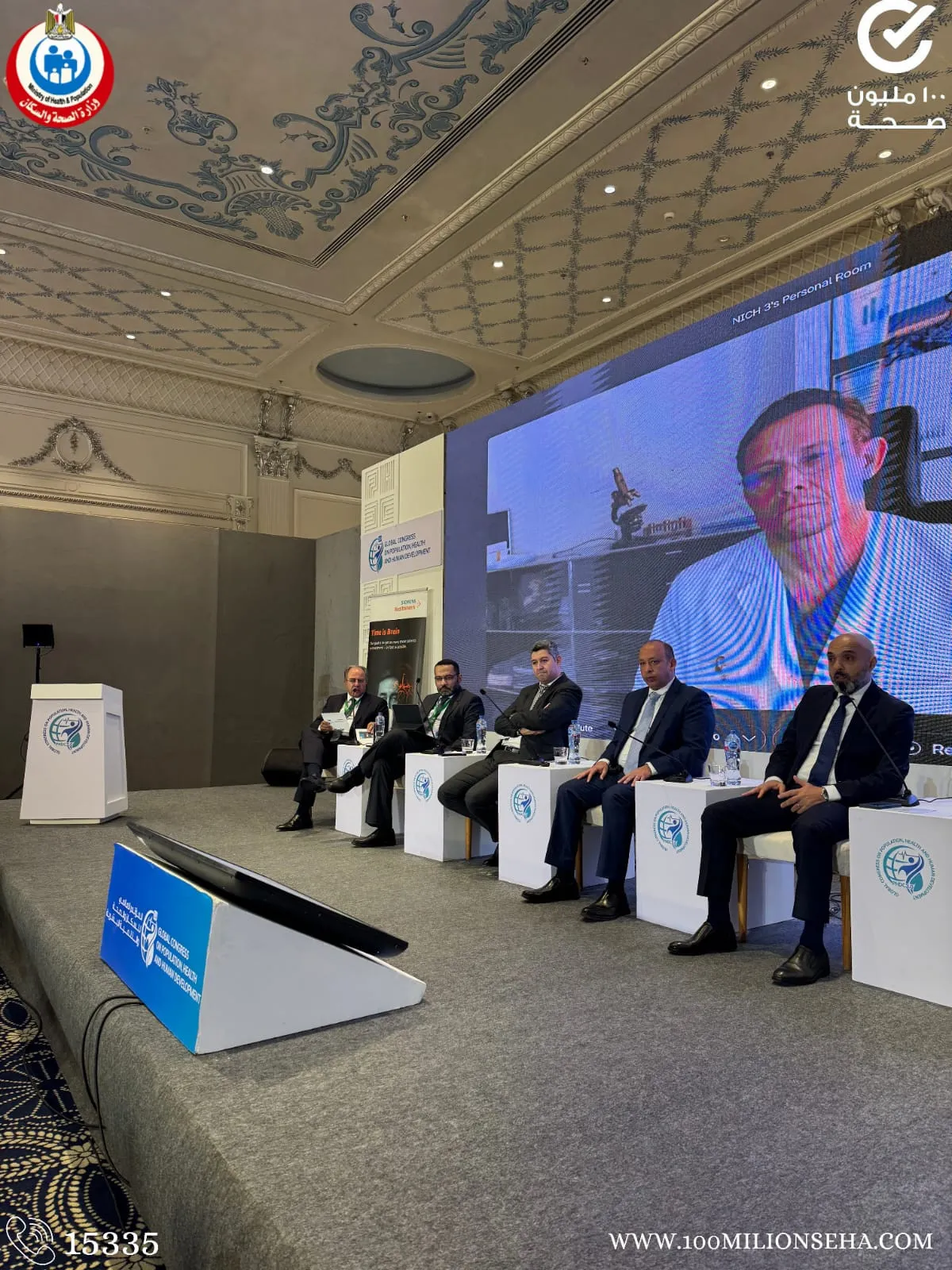
As part of the third edition of the Global Congress on Population, Health and Development 2025
Dr. Mohamed Hassany, Assistant Minister of Health for Public Health Projects and Initiatives, attended a panel discussion titled “Stroke Treatment at Scale: From Vision to Implementation”
The session covered:
- An analysis of the gaps and challenges hindering equitable access to stroke treatment services
- The need to develop medical and technical capacities in this vital field
- The importance of strengthening the readiness of health facilities and integrating emergency services to ensure rapid diagnosis and treatment, in order to reduce the rates of disability and death resulting from strokes
- The importance of establishing strategic international cooperation to exchange expertise and best practices in financing, governance, reimbursement and performance monitoring, with a view to building an integrated national stroke treatment network
- A proposal to prepare a comprehensive national roadmap that guarantees coordinated and timely treatment for all citizens, while making use of modern technologies to improve medical workflows and accelerate response within the healthcare system
- The efforts of the Ministry of Health and Population to combat non-communicable diseases, particularly heart disease and stroke, through a comprehensive approach that begins with prevention and awareness, followed by early detection, and leads to effective therapeutic intervention, alongside the training of healthcare workers
- Highlighting the importance of the National Stroke Network and the role of the “Your Heart Is a Trust” initiative in raising public awareness and improving the health system’s response to these challenges
- Egypt’s progress in stroke care, having moved from scattered efforts to an integrated national system
- The challenges, the various treatment protocols, the strategic roadmap and the national efforts to tackle stroke that began years ago
- The transition from scattered individual attempts to an integrated system in line with the “Egypt 2030” vision, so that every patient receives the appropriate care in the best possible way
- The need for national and regional initiatives, since countries with limited resources suffer more due to the lack of specialised services
- Egypt’s possession of the competencies and infrastructure that qualify it to strengthen its national stroke network and support its future health vision
- The effectiveness of modern interventional treatments in saving patients’ lives and reducing costs for health systems
- A review of the experience of Switzerland, which adopted an integrated national plan for stroke care based on a strong partnership between medical specialties and close cooperation with government bodies