
Akram El-Kassas writes: The government, the treatment and health insurance file.. and the lessons of the presidential initiatives

Youm7
The health and treatment file ranks high among citizens' demands of the government, especially as it is one of the most important social and economic rights, which cannot be dispensed with or replaced. For decades, the health file remained complex, relying at times on decisions for treatment at the State's expense for the majority of citizens. When the Constitution was issued providing for an expansion of treatment and health insurance, implementation began gradually in order to raise the efficiency of government hospitals and institutions, starting in the Canal governorates and some Upper Egypt governorates in preparation for nationwide rollout. Of course, this requires effort to raise the efficiency of general and central hospitals, which for decades remained without development.
But the reality is that over the past ten years the presidential initiatives have succeeded in confronting and treating a number of chronic and serious diseases that represented a crisis for those unable to afford care. The health file is a priority: a patient can substitute food and clothing, but cannot do without medicine.
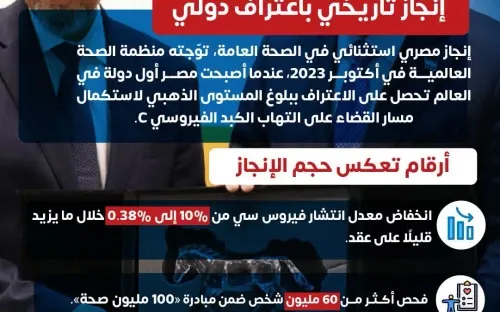
The State's health policy has seen steps forward over the past years, particularly with regard to serious diseases such as hepatitis C virus, kidney failure and cancer, as well as serious diseases whose sufferers were unable to receive treatment. The initiatives launched by President Abdel Fattah El-Sisi saved effort and time and helped achieve results in a way that overcame many administrative or bureaucratic obstacles. The initiative to end viral hepatitis C was one of the most important of these initiatives, especially as Virus C seemed impossible to confront, posed a threat to millions of Egyptians for decades, and ravaged the livers of hundreds of thousands. The initiative to eliminate Virus «C» succeeded in treating millions of Egyptians after decades in which they remained at the mercy of a deadly virus, unable to receive treatment. The initiative succeeded in treating patients free of charge, while the medicine was sold for tens of thousands in other countries, and the World Health Organization considered the initiative to eliminate hepatitis «C» a model to be followed that can be transferred to other countries.
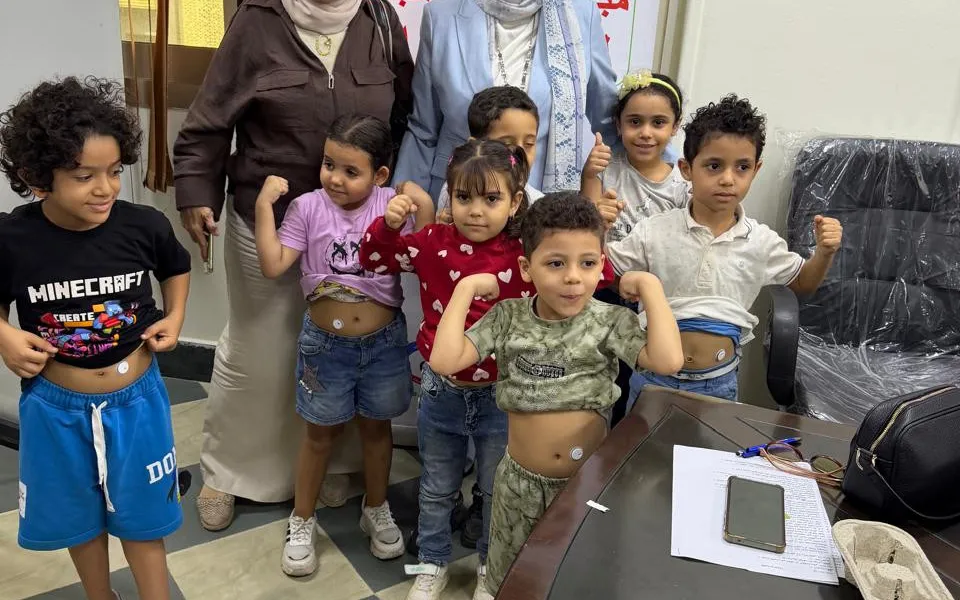
The success of eliminating Virus C gave rise to the «100 Million Healthy Lives» initiatives, one of the most important pillars of health and social protection. «100 Million Healthy Lives» succeeded in detecting and treating millions of patients, and even protecting millions of others by detecting and diagnosing the early stages of chronic diseases such as hypertension and diabetes. It gave rise to initiatives to end waiting lists for heart operations, treat spinal muscular atrophy, treat stunting and hearing impairment in children, and screen women early to prevent breast cancer — an initiative that, by everyone's testimony, succeeded in reaching groups that had not been on the map of attention.
Alongside this, implementation of the Universal Health Insurance System began in the first phase, with preparations to implement the second phase, which includes comprehensive development of hospitals, not only in terms of equipment and buildings, but also in providing trained medical staff in a way that allows the provision of services and medicine. The same is happening with regard to the provision of medicine, through the Unified Procurement Authority, which represents a step forward in dealing with the medicine file.
The point here is that the success of the presidential initiatives in confronting Virus C, or ending waiting lists for heart operations, represents a foundation on which to build for developing work in the health file. The Ministries of Health and Higher Education are supposed to study these initiatives, which can help in dealing with health questions as one of the most important economic and social rights.
Therefore, drawing on the presidential initiatives can help in dealing with urgent challenges, as well as in developing and accelerating the Universal Health Insurance file, which is forcefully imposing itself and deserves effort and focus.