
Ministry of Health presents the Egyptian self-care model at the global forum in Geneva.
His Excellency Prof. Dr. Khaled Abdel Ghaffar, Minister of Health and Population, affirmed that self-care has become a fundamental pillar for empowering individuals to manage their health and easing the pressure on health systems, stressing that citizens’ awareness of early detection and prevention is the first line of defence for the health of society.
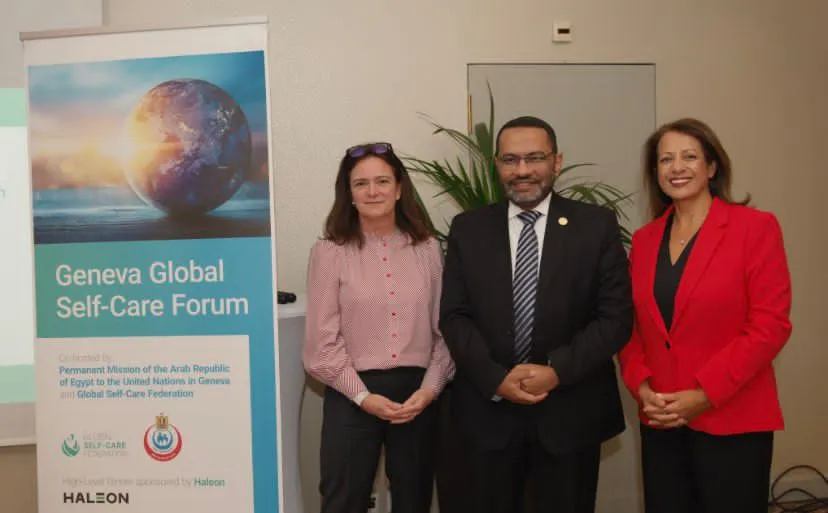
This came in his recorded speech at the opening of the first edition of the “Geneva Global Self-Care Forum”, hosted by the Ministry of Health and Population in cooperation with the Global Self-Care Federation in Geneva, Switzerland, in the presence of senior leaders of the World Health Organization, representatives of diplomatic missions and international health experts. The forum is a notable diplomatic and health achievement that reflects Egypt’s leading role in global health work and highlights the effectiveness of the Egyptian model in achieving the Sustainable Development Goals in the health sector.
His Excellency the Minister reviewed the Egyptian experience in the presidential public health initiatives, explaining that it has proven that empowering citizens with early detection and prevention is an effective tool for preserving the health of society and reducing the burden on the health system.
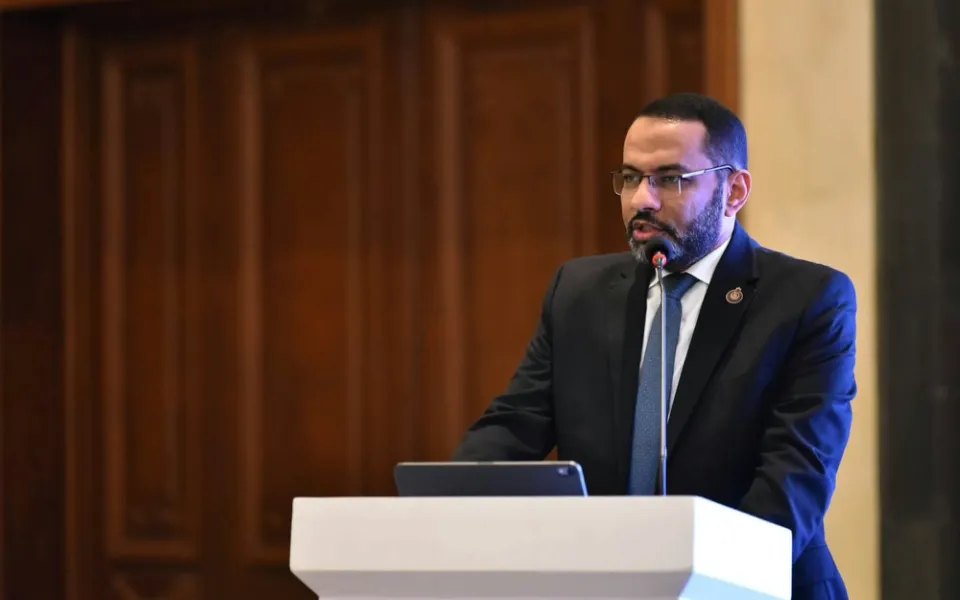
For his part, Prof. Dr. Mohamed Hassany, Assistant Minister for Public Health Projects and Initiatives, affirmed Egypt’s intention to share its national experience as an inspiring model in empowering individuals in health, stressing that the value of the forum lies in turning discussions into sustainable executive policies that serve future generations.
Ambassador Alaa Hegazy, Egypt’s Permanent Representative to the United Nations in Geneva, also noted that Egypt’s adoption of this file stems from its belief that empowering citizens to manage their health must go hand in hand with strong health institutions and effective regulation, considering self-care a real partnership between the individual and the health system, not a transfer of responsibility, which is in line with Egypt’s international commitments, particularly after self-care was included in the political declaration of the High-Level Meeting on non-communicable diseases and mental health.
The forum saw the participation of Greg Perry, Director General of the Global Self-Care Federation, and Ms. Yukiko Nakatani, WHO Assistant Director-General for Health Systems, in addition to panel discussions with representatives of the World Health Organization and the international federations of patients and pharmacists, focusing on the economic and social impact of self-care and ways to integrate it into global health policies, with the Egyptian delegation presenting its pioneering experience in developing preventive and curative services as a model to be followed internationally.