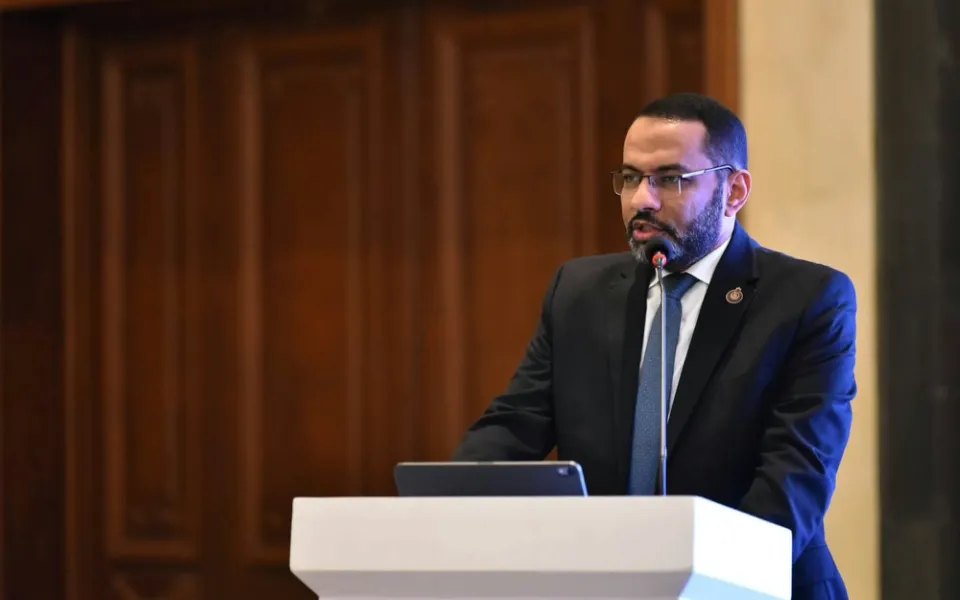

Prof. Dr. Mohamed Hassany, Assistant Minister of Health for Public Health Affairs and Projects: Betting on Human Health Is a Winning Bet.
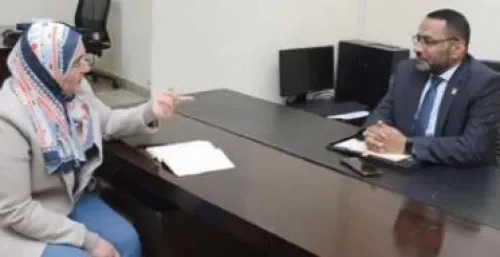
Prof. Dr. Mohamed Hassany, Assistant Minister of Health for Public Health Affairs and Projects, made the following statements in a press interview with Al-Musawwar newspaper conducted by journalist Iman El-Naggar.
To begin with... More than seven years after the launch of the public health initiatives, how do you assess their impact, and to what extent were the initiatives a turning point in health services?
The public health initiatives established a new way of thinking within Egypt's health sector, namely the doctrine of early detection: discovering diseases at an early stage and linking the detected cases to treatment programs. Here we are not talking only about the initiative for the early detection of hepatitis C, which was launched in October 2018; we are now talking about 14 initiatives working in parallel that have provided more than 270 million services to more than 92 million people, and all the initiatives share the same objectives.
Early detection is the foundation and the principle on which we work, and we also work towards a clear goal, which is improving well-known health indicators. When we were talking about hepatitis C in 2018, its prevalence, according to statistics from 2014 to 2019, stood at about 10 percent of the Egyptian population infected with the virus, and the death rate was high: between 40,000 and 60,000 Egyptian citizens died every year from hepatitis C and its complications. This figure represented nearly 10 percent of all annual deaths, meaning that 10 percent of deaths were caused by a single disease. Today we are talking about the harvest of this initiative, including a decline in the rates of new infections and a decline in the prevalence of the virus from 10 percent to less than 0.04 percent, and the awaited latest figures are expected to be encouraging and pleasing, with the decline continuing. There was also a 56 percent drop in deaths from hepatitis C compared with 2018 and 2019. This decline happened faster than expected: according to global statistics and scientific research, we expected that the decrease in deaths would not occur before ten years had passed since the elimination of hepatitis C, but the improvement in the death rate came faster than our dreams. During 2022 and 2023, deaths fell by 56 percent, equivalent to fewer than 18,000 deaths a year from hepatitis C. This is an important indicator, and it was accompanied, also as an outcome of the initiatives for the early detection and treatment of non-communicable diseases, by a 12 percent decline in deaths caused by high blood pressure.
Likewise, death rates from diabetes fell by 13 percent, according to the mortality bulletin issued by the Central Agency for Public Mobilization and Statistics for 2024 compared with deaths in 2022. This decline came as a result of the expansion of early detection programs, as most of the ongoing initiatives measure random blood sugar and blood pressure, as well as weight, height and body mass index to determine the level of obesity. These initiatives did not stop at detection alone; they linked millions of detected patients to clear treatment programs, by expanding the provision of treatment services, expanding treatment at the State's expense or through the General Health Insurance Organization and the Universal Health Insurance system, in addition to expanding the local manufacturing of blood pressure and diabetes medicines, as some 80 to 90 percent of these medicines are produced in Egypt.
I want to stress here that the State's adoption of these parallel and successful policies has brought about a real reduction in these indicators. Whereas our hopes and plans were to reach 2030 having achieved stability in death rates from non-communicable diseases such as hypertension and diabetes, we are now achieving a decline. Also, looking at cancer deaths, in 2019 they reached about 14 percent of total deaths, and according to the 2024 mortality bulletin compared with 2022, we achieved a 15 percent reduction in deaths from breast cancer, one of the most important achievements of the Presidential Initiative for Women's Health, one of whose most important pillars is the early detection of breast cancer.
Have these positive figures been repeated in the other initiatives?
The whole philosophy of the initiatives revolves around the same thing, which is improving clear indicators. For example, in the Presidential Initiative for the Early Detection of Anemia, Obesity and Stunting, we succeeded in reducing the anemia rate among primary school pupils from 42 percent in 2019 to 9 percent in 2024, which is a major improvement and an important achievement. Non-hereditary stunting rates also fell from 7 percent in 2019 to 4 percent in 2024, and obesity rates among schoolchildren fell over the same period from 13 percent to 9 percent. All these indicators will be reflected positively on children's health throughout the rest of their lives.
Newborn hearing screening is also a very great success story. We are talking about more than 10 million screenings of newborns, through which thousands of cases were detected and received drug treatment, cochlear implants or hearing aids. We are talking about more than 20,000 children who were at risk of hearing disability and have moved on to living normally. Cases detected through early hearing screening accounted for about 90 percent of the cochlear implant cases under the Presidential Initiative to End Waiting Lists, these being cases detected within the Presidential Initiative for the Detection of Hearing Impairment and Loss in Newborns. This also led to a reduction in rates of hearing disability, and all of this ultimately contributes to improving the quality of health indicators.
How has this been reflected in other goals, such as life expectancy?
Improving the quality of health indicators has been reflected in the ultimate goal, which is increasing the average life expectancy of Egyptians. We were talking about 71.6 years according to the statistics of the 2023 National Health Strategy; last year this figure rose to 71.9 years, within a short period, and we hope that the life expectancy of Egyptians will reach 75 years by 2030, in line with the goals of the National Health Strategy. This will happen by reducing and containing the causes of death through early detection and linking those detected to clear treatment programs, and, before that, through awareness and prevention, which are two very important wings of the initiatives. None of the initiatives is limited to directing citizens to go to health units or hospitals for examination and treatment; they also begin with awareness, and the media play an important role in this area by shedding light on these initiatives and the services they provide. For example, when we started the women's health initiative in 2019, the highest expectation was to receive 1,000 cases a day; the surprise was that on the first day we received 30,000 cases, and on the second day 90,000 cases. We have now reached 68 million examinations for more than 21 million women, and these are very large numbers. Success here lies not only in attracting women to screening and awareness, but also in keeping women within the early detection program, attending periodic appointments regularly and continuously, and in encouraging women to perform a monthly breast self-examination and to go to the nearest health unit if they discover anything abnormal during the examination. The State's belief in the role and importance of women is centred first on protecting them from threatening diseases; women are the pillar of society and the mainstay of the home, and when their illness is detected early, treated and cured, that is an achievement, a life saved and a cause for happiness. Breast cancer is cured all over the world thanks to early detection programs. Unfortunately, we have recently faced the spectre of premature deaths from various types of cancer, even though many of them are cured elsewhere in the world as a result of early detection, which is followed by savings in spending: instead of spending on a late-stage case until the patient dies, it is better to spend on early diagnosis and treatment so that the person lives in good health. This is what led the World Health Organization to develop the indicator of average life expectancy into healthy life expectancy, in which a person lives free of disease and productive in society without being dependent on anyone. This has become the focus of mature health systems, and it is the focus of our work. The methodology of all the initiatives implemented focuses on improving health indicators, supporting early detection programs and linking citizens to treatment programs at a time that allows the cases to be dealt with, which is ultimately reflected in the health of Egyptian citizens.
Investing in people is a priority for the political leadership. How have the public health initiatives contributed to achieving this priority?
Egypt is a large country whose population living in Egypt has exceeded 108 million people. If we look at all the health indicators that speak of investing in people, such as the Human Development Index, part of whose calculation is human life expectancy, this means that health is an integral part of development. There is no development and no investment in people without good health; having a healthy, productive citizen who performs his work and his role in society is the real investment. But if citizens are left as prey to disease, productive capacity will decline, and a person will spend long periods receiving treatment and suffering from health problems. This is what we talk about in the initiatives: anticipating the health problems we face, such as the rising rates of non-communicable diseases like hypertension, diabetes, obesity and cancer. A country of our size, population and economic situation, if it does not work in a predictive and proactive manner, will in future face a problem in its ability to spend on these patients, and a growing need to provide medicines, beds and hospitals to cope with these numbers. Investing in human health is therefore the right investment, one that will create generations able to shoulder the responsibility of the State, work with good energy and move our country into the ranks of developed nations and to the deserved standing we all dream of for our beloved country.
How many initiatives are there now, and on what basis are new initiatives determined?
We have reached 14 initiatives, and the health situation is the driver behind launching all of them; health challenges are always the motive for launching an initiative. The main motive for the hepatitis C elimination initiative was that Egypt had the highest hepatitis C prevalence in the world, with the highest rates of infection and death. The need to solve the problem radically is what always created the will to launch the hepatitis C elimination initiative, which had the honour of being the first initiative in the decade of presidential public health initiatives, under the sponsorship and close follow-up of the political leadership and the continuous follow-up of Dr. Khaled Abdel Ghaffar, Minister of Health and Population. Likewise, with the initiative for the early detection of anemia, obesity and stunting, we had reached shocking figures: among children aged 6 to 12, half were anemic, and 7 percent of children suffered from non-hereditary stunting, which is a large proportion. The prevalence of a disease and the size of the problem are the main driver for launching a particular initiative. The women's health initiative came because of the high incidence of breast cancer, compounded, unfortunately, by the fact that women in Egypt develop it about 10 years earlier than the global average, and, unfortunately, late detection leads to early death; there is no stronger motive than this for launching an initiative for the early detection of breast cancer. As for the newborn hearing screening initiative, in 2019 we had no organised, widespread hearing screening programs, and Egypt was not on the map of hearing screening programs. Today, with great pride, hearing screening coverage has exceeded 83 percent, on a par with the developed countries of Europe and America. In the early detection of genetic diseases, we have reached 19 genetic diseases that are screened for, and we are talking about 4,000 to 5,000 detected cases of children with genetic diseases who were at risk of death or of living with various disabilities.
When a genetic disease is detected, how is the case handled?
Some cases are linked to prevention programs, such as informing the mother to avoid giving certain medicines and to refrain from specific foods. Some cases are treated with specific therapeutic formula milk, and here we protect the child, who goes on to live normally with a simple intervention. A disease such as cystic fibrosis now also has an effective gene therapy available, one of the most expensive gene therapies in the world, and the number of recipients has reached nearly 400 cases receiving treatment at the Centre of Excellence at Ain Shams University. If these diseases are diagnosed early, we can link children to treatment programs and save and improve their lives, instead of their living in ill health because of a disease that can be detected and treated early.
What are the most important initiatives scheduled to be launched soon?
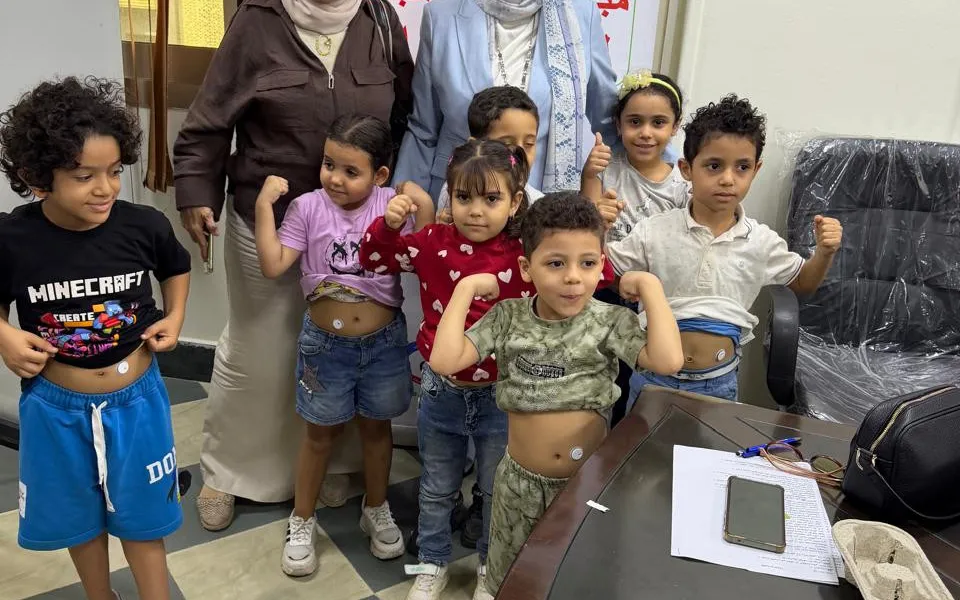
A new health initiative is scheduled to be launched in the coming period. For three years we have been studying the file of supporting children with type 1 diabetes with non-invasive blood glucose monitoring devices. The start will focus on severe cases who receive many insulin doses a day, suffer diabetic comas and are repeatedly admitted to hospital because of complications. We carried out an assessment that lasted nearly three years, accompanied by an economic study and a simulation model in one of the hospitals, and the initiative is expected to be launched in the coming days. We now have the first team trained at Misr Children's Hospital, affiliated with the General Health Insurance Organization, on fitting children with the "sensor responsible for continuous measurement". This will spare children the ordeal of repeated daily measurement and of the many painful pricks. The devices are easy to use, measure blood sugar around the clock, give a warning if blood glucose rises or falls, and can be followed by parents through a mobile phone application. In countries that have applied this system, blood sugar levels became more regular and complications resulting from low or high blood sugar decreased, and long-term follow-up of these children reduced their exposure to other eye or kidney problems. The initiative's target group was determined by the scientific committees of the General Health Insurance Organization in all governorates by selecting the most affected children, in the 4-to-8 age group. The files of fatty liver disease and rheumatic heart disease are also being studied to determine the feasibility of launching an initiative for each of them. We are currently conducting a study to estimate the disease burden of rheumatic heart disease in 27 governorates, supervised by the Higher Committee for Rheumatic Heart Disease at the Ministry of Health, to arrive at estimated rates of the size of the problem that will enable us to draw up a roadmap for launching it as an initiative and extending screening to all children of a certain age group if needed. As for the problem of fatty liver, we are currently conducting the STEPwise health survey, which involves examinations to identify the risk factors related to hypertension, diabetes, obesity, smoking and all the risk factors for non-communicable diseases. Seven years after the launch of the initiatives, it is necessary to evaluate the interventions carried out to reduce the incidence of non-communicable diseases and the related risk factors such as smoking, obesity and low physical activity, compared with the last survey conducted in 2017. One of the most important components added to the survey, which is nearing completion, is screening for fatty liver, which has become a health problem all over the world and not only in Egypt; many patients with hypertension and diabetes suffer from fatty liver disease, which research has shown to be part of the cycle of metabolic diseases. The STEPwise health survey currently includes a study of the disease burden of fatty liver in Egypt and of whether the situation calls for an initiative for early detection, diagnosis and treatment. We hope that by the end of the year the picture will be clear regarding the two initiatives.
A map of diseases in Egypt is something specialists have often called for. Do the health initiatives contribute to drawing this map?
No country makes a sound health decision except on the basis of information, and the public health initiatives provided the first database of millions of Egyptian citizens, starting with simple information such as date of birth, place of residence and geographical information about them, and data on rates of diabetes, hypertension, obesity, smoking and previous illnesses. We have a huge database for all age groups, and these data are used in many ways: the National Health Strategy 2024 – 2030 was built on them, and they also help in health planning in cooperation with the Universal Health Insurance Authority, the General Authority for Healthcare and the Ministry's Strategic Planning Department. This is one track the State is working on. Another track is the establishment of the Egyptian Health Council, which is tasked with establishing national disease registries, which are extremely important for showing the prevalence and incidence rates of diseases. We recently celebrated the establishment of the first national registry for rare diseases during the celebration of World Rare Disease Day. Through it, rare genetic diseases will be counted and their prevalence and incidence determined, and then how to deal with them will be decided in terms of spending on awareness programs and how to prevent these diseases from occurring; because they are rare, action can only be taken once the information produced by disease registries is available. This is the current direction, and the cancer registry is also being updated. The big databases are not limited to chronic diseases such as hypertension, diabetes and obesity; we also have data on communicable diseases through the Preventive Medicine Sector. Data provide the information on which action is taken in a scientific and documented manner. The health initiatives are the essential starting point for drawing the disease map, which is now strengthened and supported by the establishment of national disease registries.
How did Egypt lead the movement on the file of genetic and rare diseases globally?
Every May, a global conference called the World Health Assembly is held, bringing together all the member states of the World Health Organization. During the 78th session, held in May 2025, Egypt succeeded in securing the adoption of a first-of-its-kind international resolution obliging the World Health Organization to draw up a ten-year global plan for genetic and rare diseases. The resolution was supported by 41 countries and adopted unanimously, and Egypt led it together with Spain. It had a wide international resonance because it is the first real and correct step to light the way for the file of genetic and rare diseases, with the World Health Organization issuing a document clarifying how countries should deal with this file. In this way, the neglected file of genetic and rare diseases becomes a priority for countries' health systems, especially since the cost of diagnosing and treating these diseases is high and they are not widely available. There are more than 7,000 genetic diseases, and 95 percent of them have no treatment owing to weak information and weak scientific research resulting from the rarity of cases. This resolution is therefore the first correction of the compass of genetic and rare diseases in the world, and we are proud that Egypt is leading this resolution and continues to lead the policy of its implementation. Among the serious steps is Egypt's launch, a few days ago, of the first national strategy for genetic and rare diseases for the period 2024-2030, as well as the first disease registry.
Tell us about the international certifications and praise for what Egypt has achieved in the public health initiatives file.
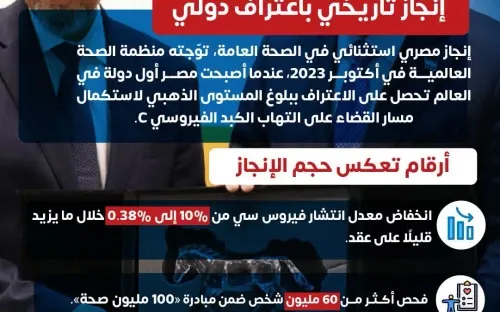
The health initiatives have had a wide international resonance and received numerous honours, including the first certification from the World Health Organization declaring Egypt the first country in the world to succeed in eliminating hepatitis C. President Abdel Fattah El-Sisi received this historic certificate from the Director-General of the World Health Organization in October 2023, and it represented global recognition and a crowning of Egypt's efforts over two decades of arduous and painstaking work. In addition, on the sidelines of the United Nations General Assembly meetings in the past two years, Egypt won two awards: the first for its efforts in treating non-communicable diseases and the success of the Egyptian model in the early detection and treatment of non-communicable diseases at primary health care units in more than 3500 health units, and the second for Egypt's success in reducing obesity rates among schoolchildren aged 6 to 12 from 13 percent to 9 percent without any therapeutic intervention, relying only on educating children and parents about good nutrition and exercise. This is a great achievement, especially since it was done without medicines, only through early detection and awareness. This honour is important, as Egypt was the first country among 12 countries honoured as the best model in combating childhood obesity. Also, in 2024 Egypt succeeded in setting five Guinness World Records for the fastest screening for cervical, prostate, breast, lung and colon cancers, with more than 6,000 cases screened in less than six hours, a record for the presidential initiatives registered in that globally renowned book of records.
What if the health initiatives were absent?
Although the initiatives began as an idea, and the term "initiative" refers to something that starts and ends at a set time, the initiatives' programs have become an approach within Egypt's health sector. If we talk about governance, we now have, for the first time, a central administration to which the General Administration of Health Initiatives reports within the structure of the Ministry of Health and Population, and an independent budget has been allocated to fund the initiatives within the budget of the Ministry of Health and Population. This roots and establishes the sustainability of the initiatives' work, so that they are not merely a period or a program that ends once it achieves its goal, but have become a sustainable model. Just as we were able to eliminate hepatitis C, we are now awaiting the renewal of the World Health Organization certification, which is renewed every three years; Egypt is undergoing another review this year to confirm the continuation of hepatitis C elimination efforts and that follow-up programs have not stopped. Early detection of hepatitis C among first-year preparatory school pupils continues for the seventh consecutive year, and hepatitis C screening continues within some initiatives, with treatment of those detected, to maintain the lowest level of prevalence, along with the continuation of all measures to prevent new infections, including safe blood and safe injection programs. All of this guarantees sustainability and the continuity of the initiatives, especially since all the initiatives focus on chronic problems that require sustainable solutions so that they remain at their lowest prevalence levels and do not represent a burden on the health system.
What is the future of the health initiatives in the governorates covered by the Universal Health Insurance system?
There is always a link between the initiatives and the Universal Health Insurance system. Although the Universal Health Insurance law focuses on the provision of curative services through the General Authority for Healthcare, while preventive services and early detection remain the responsibility of the Ministry of Health, the Authority cooperates with us seriously and effectively in early detection in the six governorates where the system has been applied, just as in the other governorates. The belief of the General Authority for Healthcare and the Universal Health Insurance Authority in integration and in the importance of the presidential initiatives has made them always keen to activate the initiatives and keep them continuously present as an integral part of their daily activity.
The model of the hepatitis C elimination initiative, like other initiatives, is held up as an example. Have any countries asked to have the Egyptian experience transferred to them?
In the past period we succeeded in implementing support programs to combat viral hepatitis in more than 11 African and Asian countries by providing Egyptian medicines to treat hepatitis C and B and training in early detection and prevention programs. We also have a sustainable partnership with the Africa Centres for Disease Control and Prevention: over the past two years we received 95 trainees from 32 African countries who were trained in prevention, early detection and treatment activities for hepatitis B and C, which is something we are proud of. The same model was applied with the European Centre for Disease Prevention and Control: we received 99 representatives from 40 European and non-European countries to exchange expertise. This is one of the inspiring models, in which the Egyptian experience is shared not only with African and Asian countries but also with European ones. Egypt also chairs the Group of Friends for the Elimination of Hepatitis at the United Nations for the third consecutive year, in recognition of Egypt's role; the group comprises 56 countries, and this is a very great recognition of Egyptian leadership, which has become a model to be followed. We also have cooperation programs with Arab and African countries to replicate the successful model of the public health initiatives, including the early detection of breast cancer and support for women's health, the early detection of anemia, obesity and stunting, and the early detection of tumors. Many countries have requested support in this file, and Egypt never stops providing support, whether in awareness programs or in training personnel; these programs have even included hundreds of Egyptian personnel travelling to many countries in the past period to provide training on the initiatives' approach and to replicate them in those countries.
How much have the public health initiatives cost since their inception?
The cost of the health initiatives from 2018 to date has exceeded 45 billion Egyptian pounds. This large cost spares us a greater cost that would be spent on treating major diseases and health problems. We have an economic study showing that every pound spent on the initiatives saves 7 pounds, and that is only the economic savings side. The initiatives have also succeeded in saving more than 2.7 million years of life.
At the end of the interview, Dr. Hassany praised the role of the media, highlighting that the word of the media professional drives society's compass and is a true measure of society's response. He said: "When we started the hepatitis C elimination initiative in 2018, and after it the women's health initiative, there were fears of low turnout by citizens and of their limited willingness to engage in these initiatives, owing to the habits and culture of many people of avoiding early detection programs and always waiting for a symptom or the illness to appear. Now more than 92 million Egyptian citizens have benefited from at least one of the initiatives' services, which is a large number and reflects two things: first, society's trust in the initiatives' services; and second, a greater responsibility and the importance of working to achieve sustainability in these programs. The story is not only about the role of government, the private sector and civil society; the media also play a critical and important role, because citizens trust the media, trust media messages, respond to them and interact with them."