
Minister of Health: Political will played a crucial role in the success of the “Women's Health” initiative
Al-Osboa
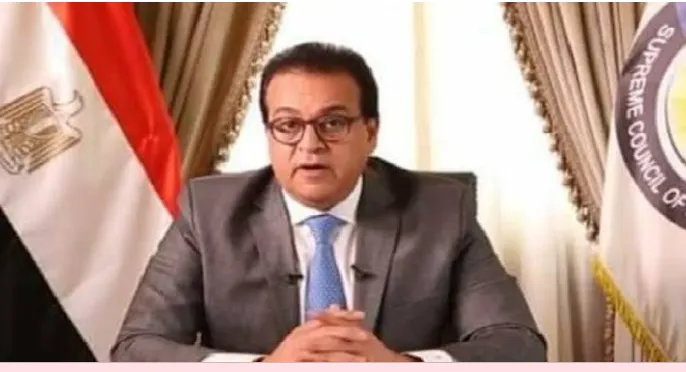
Minister of Health and Population Dr. Khaled Abdel Ghaffar said that the political will and the support provided by President Abdel Fattah El-Sisi to the initiative to support Egyptian women's health played a crucial role in its success, as the President receives periodic follow-up reports every week on the progress made in the initiative, in addition to financial funding and government commitment.
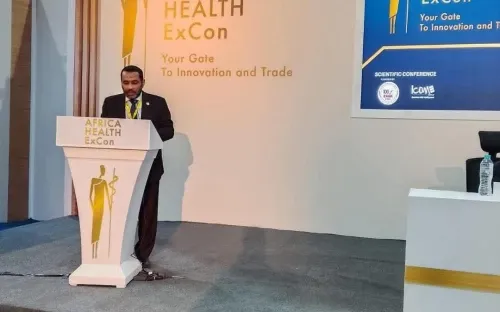
This came during his participation in a panel discussion entitled (The Presidential Initiative to Support Egyptian Women's Health: Success Stories and International Cooperation), on the sidelines of the third day of the Second African Medical Exhibition and Conference (Africa Health - Africa Health ExCon).
The Minister of Health added that Egypt has achieved great success in supporting the health of women, who represent 49% of Egyptian society, and that the Egyptian state is doing everything in its power to ensure that their needs and those of their children are met, as the health of Egyptian women is the health of all of Egypt.
He noted that the initiative began in 2019 and has screened 28 million Egyptian women from the age of 18 for the early detection of breast cancer, which is a very large number, and among its most prominent results was a decrease in the rate of detecting breast tumors in their late third and fourth stages from 95% to 29%; the initiative also launched massive awareness campaigns across all media outlets and social media.
He added that training human resources and building their capacities was among the most prominent challenges the Egyptian state overcame, stressing the important role data management played in the success of the system, saying that the initiative's efforts were tailored to the culture of Egyptian women, that 19,000 women were diagnosed with breast cancer, and that Egypt cooperated with prestigious international organizations and institutions, foremost among them the World Health Organization and North West University.
He stated that the Egyptian state has done and is still doing its best to empower women in their battle against cancer and to enable them to enjoy good health and a good life, but challenges remain, the most important of which is providing financial support, adding that focusing on women's health is the core of developing society.
For her part, Shereen Mahdy, member of the Health Council at the National Council for Women, who attended on behalf of Dr. Maya Morsy, President of the Council, said that the Council plays a major role in supporting the presidential women's health initiative as a link between Egyptian women and health institutions.
She pointed out that the Council has the ability to reach them in every corner of Egypt, from the cities to the hamlets and villages, and that among the most prominent problems we found was that women lacked sufficient awareness of the disease and believed that treatment was unavailable, and that if it was available, it was very expensive.
She noted that there were other psychological problems, represented in women's fear of mastectomy or hair loss, which affects their femininity and exposes them to divorce, and that the center helped reassure their fears and convince them of the necessity of early detection through campaigns such as “You Deserve It”, “You Matter More” and “Protect Yourself”.
Shereen Mahdy stressed that among the most prominent problems identified by the Council is the absence of periodic follow-up by women, as they mistakenly believe that being diagnosed as free of the disease means they are immune to it and will not contract it later, which is an incorrect belief; she concluded her speech by stressing that the center is always ready to cooperate with the Ministry of Health to pave the way for it and to play the role of a link between it and Egyptian women.
In the same context, the World Health Organization Representative in Egypt, Dr. Naeema Al-Gasseer, said that the organization has played and continues to play a tremendous role in supporting women's and children's health globally, praising the Egyptian experience represented by the (100 Million Healthy Lives) campaign and the presidential Women's Health Support Initiative, stressing that among the most prominent factors of its success is that it did not focus only on the medical model, but also on women's health from the psychological, social and cultural perspectives, supported by other initiatives such as “Decent Life”, which ensures the safety of water, food and housing, in addition to health care, as Egypt has established an integrated care system.
Dr. Naeema stressed the need to adhere to health care ethics to eliminate gender-based bias, emphasizing the importance of preparedness because increased awareness means increased demand, adding that Egypt has paid great attention to the health of its women.
She praised Egypt's successful experience in confronting the coronavirus pandemic (COVID-19) and eliminating Hepatitis C, and also praised its efforts in documenting this experience, because data is one of the most important factors on which plans and practices are built within a framework of accuracy and transparency.
She said that development and economic progress will only be achieved in a society that enjoys good health, especially the health of women and girls.
For his part, Dr. Hesham El Ghazaly, Professor of Oncology at Ain Shams University Faculty of Medicine and head of the presidential initiative to support Egyptian women's health, presented the pillars of the presidential initiative, namely: raising awareness, early detection, diagnosis, treatment and supervision, training medical staff, scientific research, data analysis, and launching centers of excellence.
He added that, as of last April, the initiative had succeeded in detecting 18,954 breast cancer cases among the women screened, noting that women in their fifties were the group most affected by the disease.
Dr. Hesham stressed the importance of multidisciplinary teams in all centers involved in the initiative.
He spoke about the “Around Egypt in 100 Days” initiative, which aims to ensure women's empowerment, cooperation with all health care providers, building field capacities, review for development and measuring satisfaction, and finally activating a governance system tailored to needs.
He affirmed that the initiative aims to cover all governorates of Egypt, stressing the importance of international cooperation to exchange expertise and support the achievement of the pillars of the cancer control initiative.
Meanwhile, the head of the World Health Organization's initiative to combat breast cancer, Dr. Ben Anderson - speaking via Zoom - said that the initiative's goal is to reduce breast cancer deaths by 2.5% each year, which would save the lives of 2.5 million people by 2040.
He added that the initiative is based on the following pillars: early detection, prompt diagnosis within two months at most and in easily accessible places, and completing the treatment journey through to recovery at a rate of 80% in order to achieve the desired benefit.
He stressed the importance of training and capacity building, data management, and providing facilities to ensure the success of the process, because it is an integrated set of steps and not a switch that can be turned on and off, also stressing the need to set key performance indicators to identify where the next efforts should be focused.
He explained that the organization is always ready to work with governments to provide the necessary support according to their specific needs, as each country is a unique entity and the answer and solution may differ depending on geographical location, adding that communication and coordination between the various centers in all countries is very necessary to achieve the initiatives' goals.
In the same context.. the head of the Africa Centres for Disease Control and Prevention (Africa CDC), Dr. Mohamed Abdel Aziz, said that support and political will are essential to ensure the success of any initiative, explaining that the efforts made during the coronavirus pandemic can be learned from in combating non-communicable diseases as well.
He added that the Egyptian experience in dealing with Hepatitis C and breast cancer should be replicated across African countries, stressing the need to train human resources and build their capacities so that they can detect diseases early and give the correct diagnosis.