
The Ministers of Health and Population and of Social Solidarity Discuss Facilitating the Issuance of the Integrated Services Card and Linking the Premarital Screening Initiative with the “Mawadda” Program to Preserve the Egyptian Family
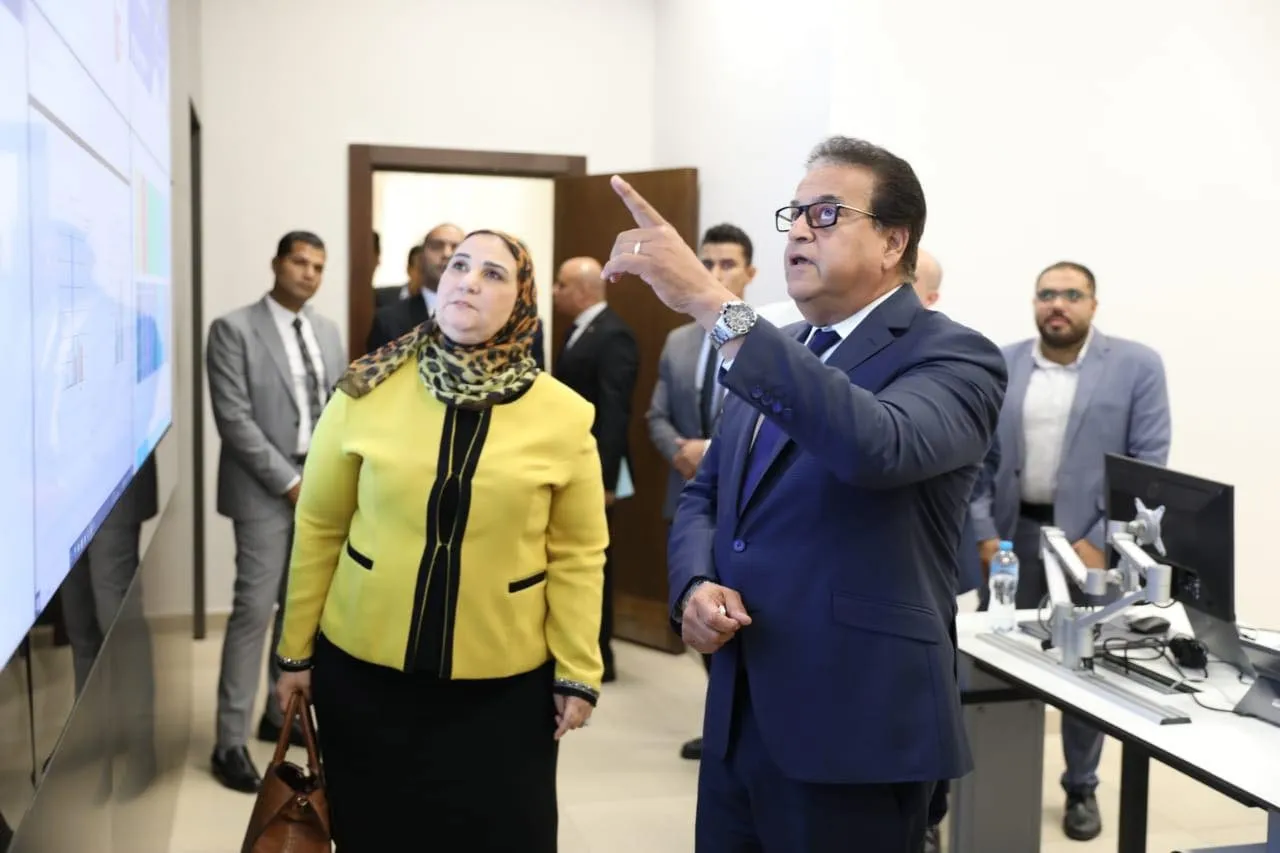
The Ministers of Health and Population and of Social Solidarity discuss joint cooperation to integrate health and social services for citizens
Abdel Ghaffar and El-Kabbag discuss facilitating the issuance of the Integrated Services Card, linking the Premarital Screening initiative with the “Mawadda” program to preserve the Egyptian family, integrating child sponsorship (kafala) services, and the mechanism of cooperation with NGOs
Dr. Khaled Abdel Ghaffar, Minister of Health and Population, and Ms. Nevine El-Kabbag, Minister of Social Solidarity, held a meeting on Wednesday evening to discuss aspects of joint cooperation between the two ministries to ensure the integration of health and social services for citizens.
The meeting reviewed the joint cooperation files within the health social protection network for citizens, discussing cooperation in the health services provided to the various groups and ages served by both ministries through different programs, including the First 1,000 Days program, the “Mawadda” and “2 Kefaya” programs, the Integrated Services Card for persons with disabilities, the health conditionality for mothers and children benefiting from the “Takaful” cash support, the protection of sponsored children within a unified system, as well as the positive family parenting program and the provision of health and psychological services to children and the elderly in care institutions, in addition to cooperation in relief and health care services at the Egyptian Red Crescent and other NGOs that provide health services.
The Minister of Health and Population noted the importance of cooperation between the “Mawadda” program and the presidential initiative for Premarital Screening, by using the presidential initiative's database to identify the groups targeted for health awareness and education, stressing the need to integrate health, social and educational services to protect Egyptian families and invest in them.
Dr. Khaled Abdel Ghaffar stressed the importance of continuous cooperation and coordination between the rural women leaders affiliated with the Ministry of Health and Population and the social women leaders of the Ministry of Social Solidarity, who number 15,000, to achieve integration in raising awareness of the services provided to citizens within health and social care programs.
Dr. Khaled Abdel Ghaffar underlined the importance of quickly completing the network linkage between the Ministries of Health and Population and of Social Solidarity for the Integrated Services Card system, as the two sides discussed coordination and cooperation mechanisms regarding medical examinations for persons with disabilities within the second phase of the Integrated Services Card.
The meeting also discussed health care for children in social care homes, as well as the automation of the file system for foundling children in shelters, and the two sides agreed to allocate a health office inside the National Kafala Center to facilitate the issuance of health papers and certificates for children and their receipt of the necessary vaccinations.
The meeting also addressed the accreditation and expansion of “2 Kefaya” clinics to strengthen reproductive health services in areas suffering from a service gap or unmet needs, in order to maximize efforts to organize and develop the Egyptian family.
The two sides affirmed joint cooperation in providing health care services to mothers and children benefiting from the “Takaful and Karama” cash support, underscoring the importance of reproductive health for Takaful beneficiaries in all areas, especially rural areas, and of health care for children under 6 years of age to verify completion of the vaccination schedule, child nutrition and growth, early detection of disability, and protecting the child from all diseases during the first 1,000 days and early childhood.
For her part, Ms. Nevine El-Kabbag, Minister of Social Solidarity, stated that the Ministries of Social Solidarity and of Health and Population share many integrated programs, especially as Social Solidarity addresses the quality of life of poor families and those below the poverty line in an integrated manner, providing a package of services that enables them to attain a decent standard of living and to invest in their children in a way that reinforces the vision of sound investment in social capital.
El-Kabbag discussed the network linkage between the two ministries to facilitate real-time data exchange, especially data on pregnant women, newborns, persons with disabilities, sponsored children and Takaful and Karama beneficiaries, as the rapid exchange of social health data at all levels helps services and benefits reach those entitled to them and rationalizes the use of state resources in the right areas.
The Minister of Social Solidarity also stressed the importance of coordination regarding the NGOs that provide health services, which fall under the umbrella of the Ministry of Social Solidarity but obtain their technical accreditation from the Private Medical Treatment Sector at the Ministry of Health, noting that about 30% of citizens receive health services from NGOs, especially at the level of villages and hamlets; accordingly, the importance of linking these NGOs' services with those of the Ministry of Health was highlighted, including intensive care beds, dialysis machines, incubators, oncology centers and other services.
El-Kabbag added that the Ministry of Health and Population has a role in promoting the physical and mental health of children and the elderly in social care homes and in institutions for homeless adults; she requested support from the Ministry of Health and Population in preparing updated, automated health files for all residents of care homes, and also stressed the importance of cooperation with the General Secretariat of Mental Health regarding psychological support for certain groups that may pose a danger to themselves and to their peers in the same place.
She stated that the experience of cooperation between the General Secretariat of Mental Health and the Fund for Drug Control and Treatment of Addiction has had a tangible positive impact, and this is what is required in all care services.
Reference was made to the important role played by the zakat committees of Nasser Social Bank, spread across the Republic with a total of 3,600 committees, and their support for a number of hospitals, dispensaries and medical clinics, such as Abu El-Reesh Children's Hospital, the Oncology Hospital, Ain Shams Specialized Hospital and several hospitals in Upper Egypt; the governance of these committees is currently being strengthened by restructuring their boards, automating them, and unifying their databases and linking them to the Ministry of Social Solidarity.
El-Kabbag thanked the Minister of Health and Population for his support for unifying the kafala system, incorporating the “Mawadda” program into the presidential program for premarital medical screening, relying on a single system for disability certification and for the “Karama” program, and making birth and disability data available until full network linkage between the two ministries is achieved. El-Kabbag promised Abdel Ghaffar to support primary care units, numbering 1,000 units, with computers to facilitate data exchange, funded by the Ministry of Social Solidarity and Nasser Social Bank. The two ministries agreed to hold a joint workshop with NGOs specialized in health services to coordinate work, govern procedures and maximize the use of all resources for the benefit of Egyptian citizens, particularly those most in need of care.