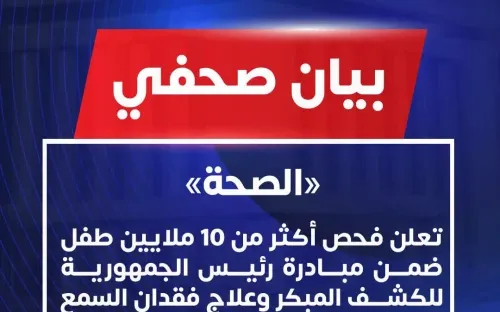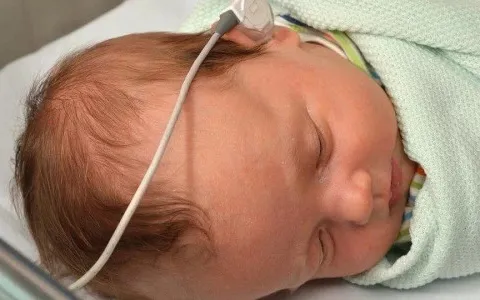

Early hearing screening for 71% of 2022 newborns.. and a leap in the number of cases referred to the second level of screening
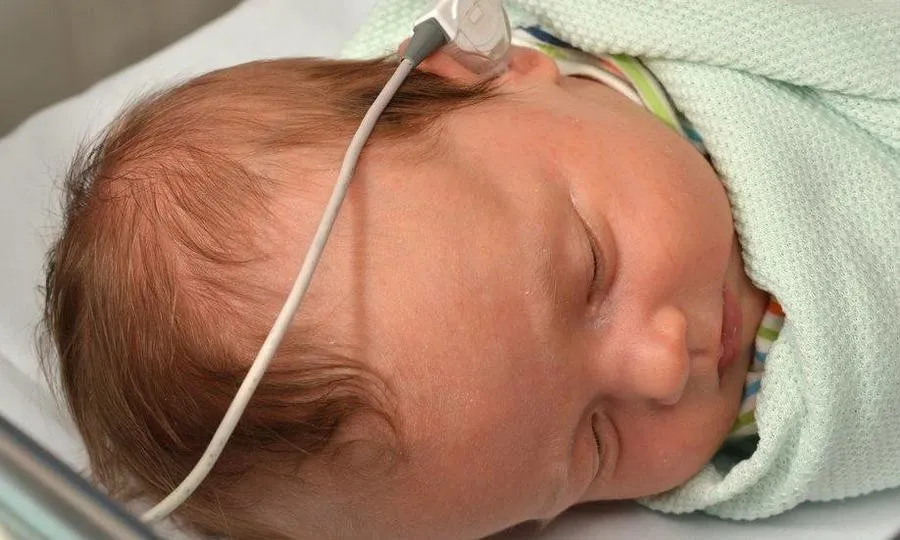
During 2022, the presidential initiative for the early detection of hearing impairment and loss in newborns was able to conduct early hearing screening for 71% of all newborns, who numbered 2 million 183 thousand children, and to achieve a leap in the number of cases referred to the second level of screening, without an increase in the number of primary screening centers and units, compared to 2021
The initiative for the Early Screening and Treatment of Hearing Impairment and Loss in Newborns is a presidential initiative launched in September 2019 for the early detection and treatment of hearing impairment in newborns, and to reduce the financial burden of the condition when it is discovered at late stages.
2.5 billion people at risk of hearing loss in 2050
Early hearing screening of newborns is one of the health programs recommended by the World Health Organization to its member states, to curb the growing number of people with hearing impairment worldwide, estimated in 2021 at more than 430 million people around the world.
According to WHO estimates, the numbers are expected to increase by 2050 to reach 2.5 billion people at risk of hearing loss, equivalent to one in every four people suffering from deafness, which increases the need for the early hearing screening of newborns in order to avoid hearing loss and impairment at early ages.
A gradual increase in the rate of early hearing screening out of total births
3 years after the launch of the presidential initiative, during which it was able to conduct hearing screening for 3 million 946 thousand children and to refer 25,588 children to the second level of screening at 30 hospitals across the Republic, in order to accurately confirm whether or not the case is positive and to provide the necessary treatment services to those affected.
Tracking the initiative's results year by year shows a gradual increase in the rate of early hearing screening coverage out of total births: the rate reached 46% in November 2020 and rose in 2021 to 61%, as the number of primary screening centers and units increased from 1364 health units to 3500 units.
.
The need to explain the doubling of the number of cases referred to the second level of screening in 2022
Meanwhile, early hearing screening coverage reached 71% in December 2022 without any notable increase in the number of primary screening units and centers, which means growing awareness and uptake of the initiative among citizens, and that it was not affected by the global economic crisis.
It is worth noting that the number of cases referred to the second level of confirmatory screening in 2022 doubled compared to the numbers referred in the previous two years, reaching 12,370 children, which raises a question about the causes of this increase: was there a medical problem affecting that year's newborns that affected their hearing? Or did the initiative manage to reach the cases that truly suffer from hearing impairment, which is a positive indicator.
Early hearing screening must be conducted for 95% of newborns
Based on the basic quality standards for early hearing screening programs for newborns agreed upon by the World Health Organization, which stipulate reaching at least 95% of total births, greater effort is required this year to achieve that rate, either by increasing the number of centers or by intensifying awareness among citizens.
The standards also stipulate that the rate of cases referred to the second level of screening should not exceed 4% of the total cases screened, which the initiative achieved in 2022, as the referral rate to the second level reached about 0.8%.
Published in Cairo 24 on 28 January 2023