
Deputy Prime Minister and Minister of Health and Population: Egypt played an important role in the UN draft resolution on rare diseases
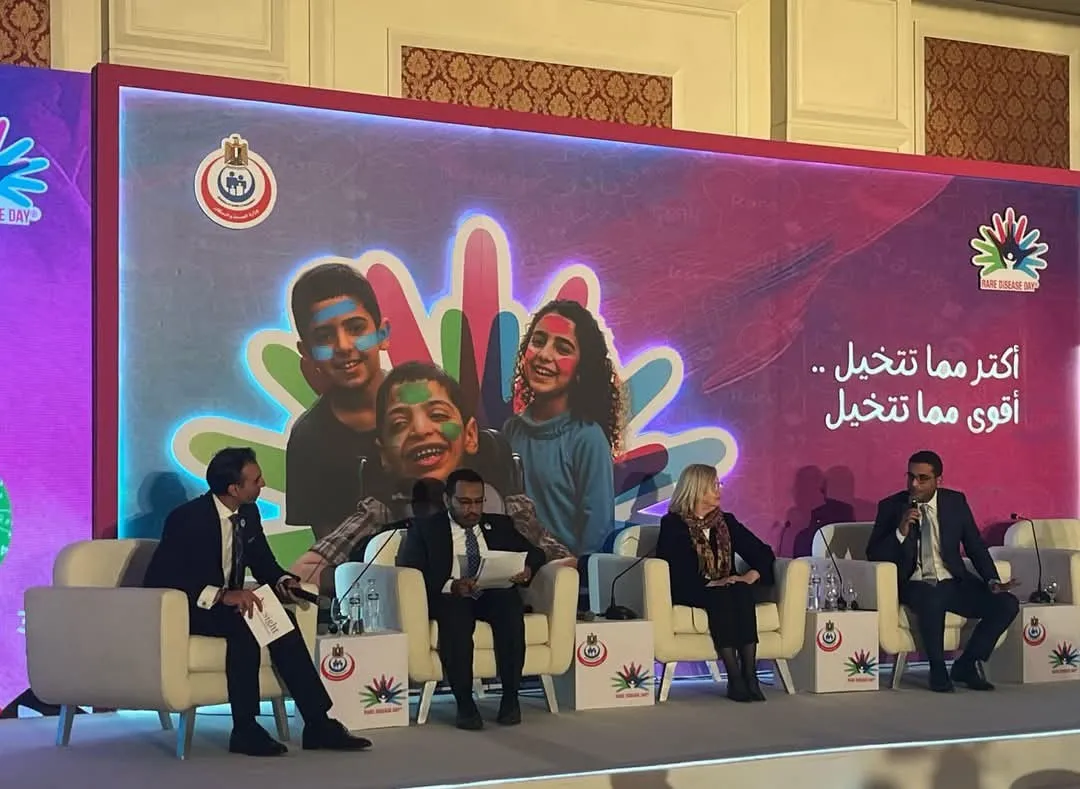
During the celebration of World Rare Disease Day..
Deputy Prime Minister and Minister of Health and Population: Egypt played an important role in the UN draft resolution on rare diseases
Dr. Khaled Abdel Ghaffar calls for global solidarity in facing the challenges of chronic diseases
WHO Representative in Egypt: Egypt was at the forefront of countries that sought to tackle rare diseases
CEO of Rare Diseases International: Establishing a sustainable care system is essential to improving patients' health outcomes
Head of Medical at Sanofi Egypt and Africa: Concerted efforts between the public and private sectors are a pillar of creating an ideal environment in the patient's interest
=======================
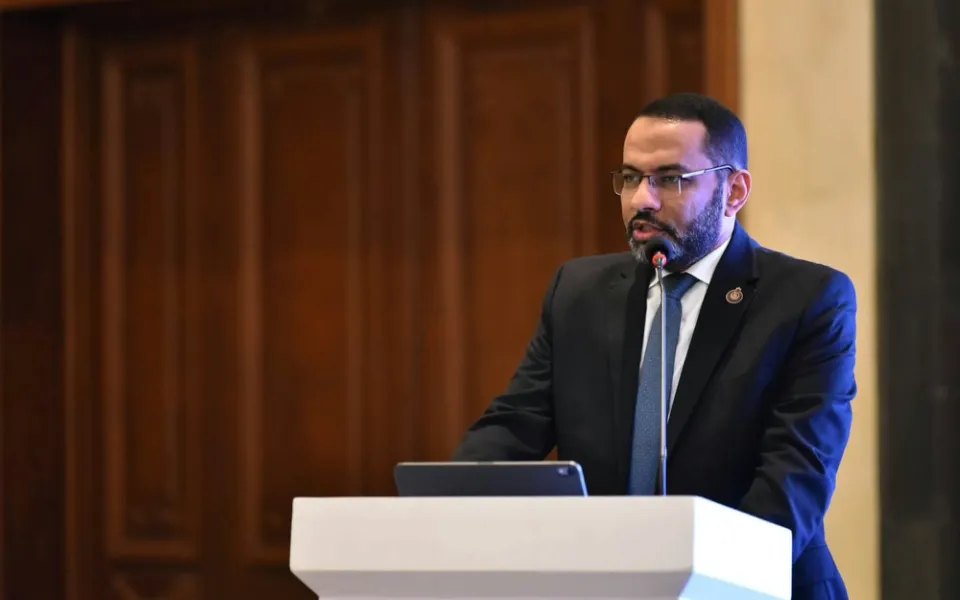
Dr. Khaled Abdel Ghaffar, Deputy Prime Minister and Minister of Health and Population, stressed the need for global solidarity to face the challenges of rare diseases, through early diagnosis, finding effective treatments, securing the necessary funding, and raising awareness of these diseases.
This came during his speech at the celebration of World Rare Disease Day, organized by the Ministry of Health and Population, in the presence of Dr. Ahmed Taha, Chairman of the General Authority for Healthcare Accreditation and Regulation; Dr. Mohamed Hassany, Assistant Minister of Health for Public Health Projects and Initiatives; Dr. Nima Saeed Abid, WHO Representative in Egypt; Alexandra Heumber, CEO of Rare Diseases International; and a number of representatives of companies working in health care, as well as medical researchers.
In this regard, the Deputy Prime Minister thanked Dr. Mohamed Hassany, Assistant Minister for Public Health Projects and Initiatives, for his efforts in the Arab Republic of Egypt's sponsorship of a resolution on rare diseases expected to be issued by the Seventy-eighth World Health Assembly, scheduled to be held next May, in cooperation with the Kingdom of Spain. The draft was co-sponsored by 26 WHO member states, in addition to the support of 230 non-governmental organizations working in the field of rare diseases.
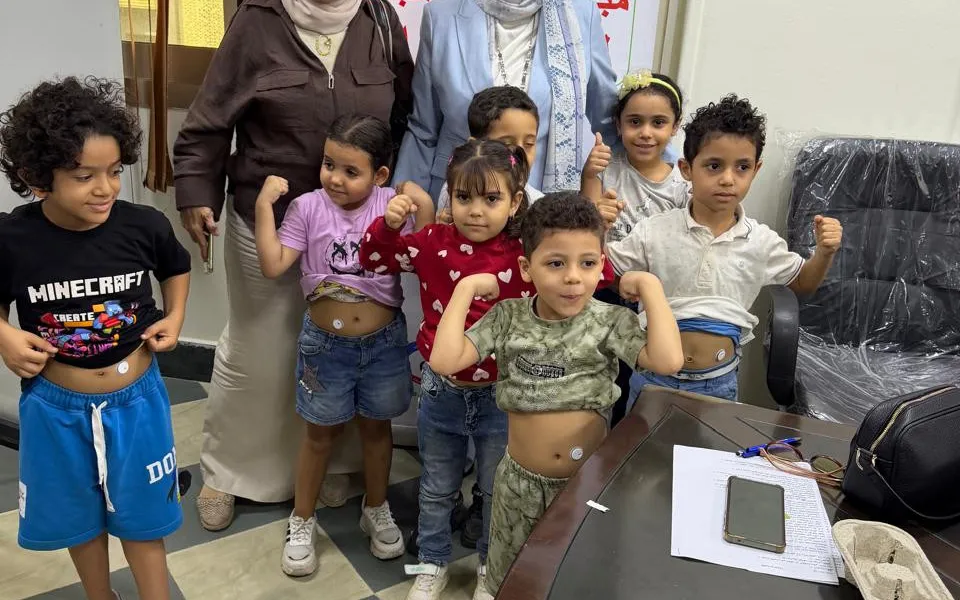
During his speech, Dr. Khaled Abdel Ghaffar highlighted the humanitarian side of the rare diseases issue, which represents a financial and psychological burden on Egyptian families, noting that there are rare diseases that stand unresolved and cause the death of children at a young age. In this regard, he reviewed Egypt's efforts over the past 25 years in expanding early screening programs for newborns, launching a sustainable national program for rare disease screening covering 19 genetic diseases in 2021, as well as expanding the treatment of rare childhood cancers and blood diseases such as sickle cell anemia, thalassemia and hemophilia.
The Deputy Prime Minister praised the efforts made by cooperation partners from the companies (Sanofi, Roche, HVD, Illumina) in supporting Egypt's efforts to tackle rare diseases through rare disease initiatives. He also thanked Ms. Alexandra Heumber, CEO of Rare Diseases International (RDI), who contributes exceptional efforts in defending patients' rights globally and promoting their inclusion, and for her pivotal role in supporting Egypt and Spain in their efforts to include a resolution on rare diseases on the agenda of the upcoming World Health Assembly.
For his part, Dr. Nima Saeed Abid, WHO Representative in Egypt, said: "Rare diseases, despite their individual rarity, collectively affect more than 300 million people around the world, according to World Health Organization statistics. It is also worth noting that there are about 5,500 rare diseases recognized globally according to the organization.. Egypt was at the forefront of countries that sought to tackle rare diseases, and Egypt has also sponsored a resolution at the World Health Assembly, to be held in 2025, to address the challenges facing the rare disease community through a comprehensive global framework, which will help increase awareness and strengthen cooperation regarding these diseases."
Alexandra Heumber, CEO of Rare Diseases International, stressed the importance of turning political will into concrete action, reviewing the key priorities of global efforts to tackle rare diseases, and explaining that establishing a sustainable health care system is essential to improving health outcomes for patients with rare diseases.
For his part, Dr. Sherif Roshdy, Head of Medical at Sanofi Egypt and Africa for the pharmaceutical sector, expressed his appreciation on behalf of Sanofi for participating in the Ministry of Health and Population's conference aimed at raising awareness of rare diseases, stressing that concerted efforts and partnerships between the government sector, the private sector and civil society under the auspices of the Ministry of Health and Population are one of the pillars of creating an ideal environment for working in the patient's interest. He said: "Sanofi's commitment is effectively embodied in raising awareness through rare disease initiatives. Recently, Sanofi Egypt contributed as a main supporter of the rare diseases awareness marathon, in addition to its cooperation today in the event dedicated to introducing World Rare Disease Day, which reflects Sanofi's commitment to working side by side with the Egyptian Ministry of Health to achieve a sustainable positive impact." He added that Sanofi's vision and pioneering role are not limited to providing the latest treatments for rare diseases; the Gaucher initiative, running for more than 25 years in cooperation with the Hope Foundation, is a clear example of Sanofi's constant dedication and commitment to providing treatment and support for patients with rare diseases.
For his part, Dr. Ziad El-Ahwal, Head of Government Affairs, Health Policy and Market Access at Roche Pharmaceuticals, said: "We are proud of the pioneering role played by the Ministry of Health and Population in supporting patients with rare diseases. Today's event is a confirmation of the ongoing cooperation between the public and private sectors within Egypt's health system. We affirm our commitment to working hard with the Ministry of Health and Population to promote innovation and ensure sustainable solutions that achieve health equity in the most important files. We believe that investing in health is investing in the future, and together we seek to build a sustainable health model
that supports Egypt's vision of leadership in health."
Dr. Mohamed Abou El Naga, General Manager of HVD in Egypt and North Africa, added: "HVD Egypt is committed to supporting Egypt's efforts in diagnosing rare diseases by providing advanced and integrated diagnostic solutions. Thanks to the latest technologies, we provide doctors and specialists with accurate and rapid diagnostic tools, which helps enhance early detection and improve treatment opportunities. This role is in line with the Ministry of Health's vision of achieving more advanced and efficient health care."
Gregory Gonzales, Director of Illumina in the Middle East, pointed out that the company is committed to supporting Egypt in becoming one of the leading countries in health care by enhancing access to precision and personalized medicine through advanced genomic technologies and specialized training. "We are working to improve the diagnosis and treatment of rare diseases, cancer and infectious diseases, which helps raise the quality of health care and improve patients' lives. Through our long-term partnership, we provide Egypt with the latest genetic sequencing platforms, which strengthens its capabilities in genetic research and precise diagnosis, and supports the transformation of the health system towards innovation and sustainable development."