
Deputy Prime Minister and Minister of Health chairs the first meeting of the Supreme Committee for developing a comprehensive national strategy for the safety of...
Deputy Prime Minister and Minister of Health chairs the first meeting of the Supreme Committee for developing a comprehensive national strategy for patient safety
________
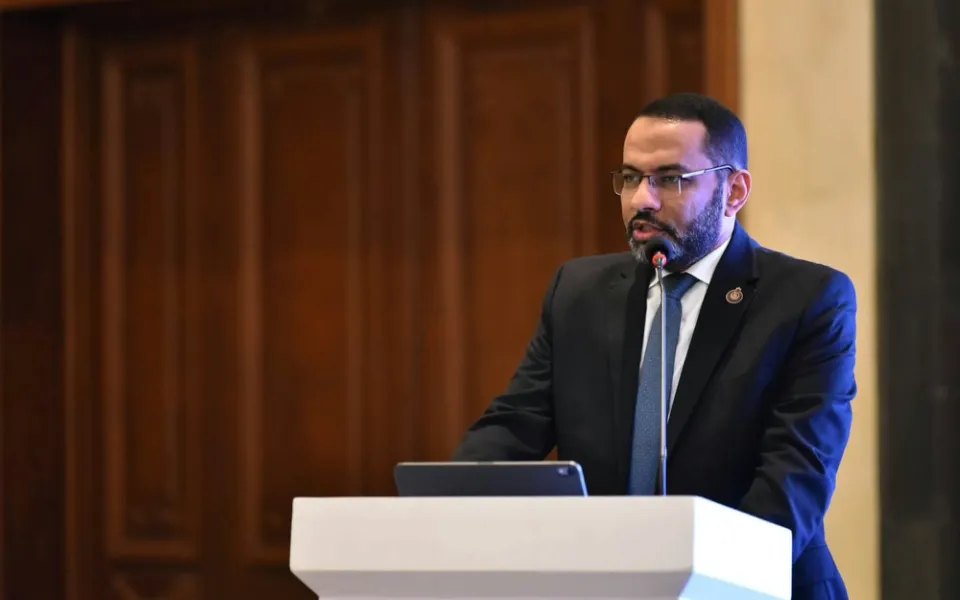
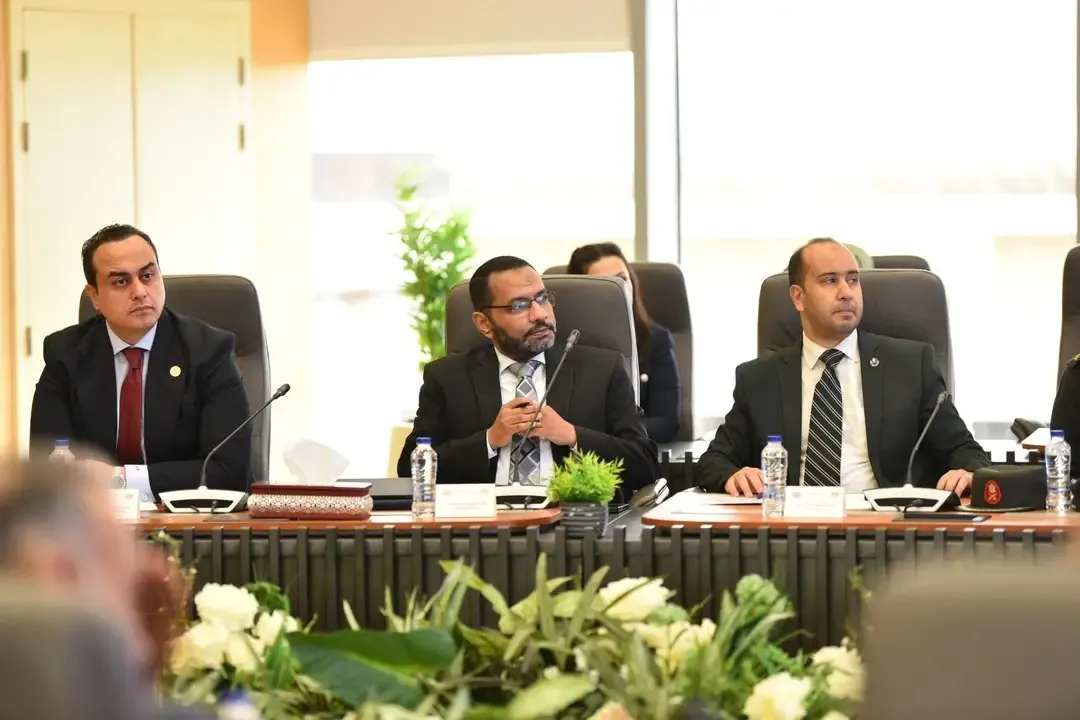
Dr. Khaled Abdel Ghaffar, Deputy Prime Minister and Minister of Health and Population, chaired the first meeting of the Supreme Committee for raising the quality of healthcare and patient safety, in the presence of Dr. Ahmed Taha, Chairman of the General Authority for Healthcare Accreditation and Regulation, Dr. Ahmed El-Sobky, Chairman of the General Authority for Healthcare, and a number of the Ministry's leaders and representatives of relevant bodies. The meeting is part of efforts to strengthen the quality system within health facilities and raise the level of medical services provided to citizens, in line with the goals of the national health strategy and the achievement of Egypt Vision 2030.
During the meeting, the Minister stressed the importance of unifying and intensifying efforts among the various institutions, within comprehensive coordination at the state level, in order to formulate clear controls and standards that contribute to preparing qualified and trained medical staff, supporting the desired shift towards enhancing patient safety and reducing human errors. He pointed to the need to form specialized technical committees to provide recommendations and follow up on implementation, as part of preparing a comprehensive national strategy for patient safety, which is expected to be approved by the Egyptian Health Council and the Healthcare Accreditation and Regulation Authority, in line with the state's regulatory directions.
Dr. Hossam Abdel Ghaffar, official spokesperson for the Ministry of Health and Population, explained that the Minister stressed that formulating this strategy is a pivotal step in activating the Medical Liability Law, as patient safety is an integral part of this legal framework. He also highlighted the importance of focusing on the prevention of medical errors and on caring for the groups most vulnerable to health risks and infection, pointing to the activation of the General Directorate for Patient Safety within the Ministry's new organizational structure, in light of global estimates indicating that four out of every hundred patients in developing countries contract infections inside health facilities, which calls for applying the best international standards and practices.
The Ministry's official spokesperson noted that the General Directorate for Patient Safety will be responsible for governing procedures and unifying concepts and standards across various levels, with the aim of enhancing the efficiency of the healthcare system. He stressed the importance of generalizing the professional diploma in patient safety, as a scientific track that contributes to reducing medical error rates, especially as the state expands the implementation of the Universal Health Insurance system, where the quality of medical services is one of the main pillars in this context.
During the meeting, attendees reviewed the World Health Organization's definition of patient safety as "the absence of preventable harm to patients and the reduction of the risk of unnecessary harm associated with healthcare to an acceptable minimum". They stressed the importance of allocating the necessary material and human resources to achieve the desired goals, and compared the cost of applying quality standards with the cost of ignoring them, as WHO estimates for 2024 showed that about 134 million adverse events occur annually, leading to nearly 2.6 million deaths, while the cost of medication errors is estimated at about 42 billion dollars annually worldwide.
The meeting also discussed the common causes of harm to patients and reviewed the experiences of a number of countries in applying patient safety principles and practices, in addition to examining the WHO Global Patient Safety Action Plan (2021–2023). The organizational structure for quality and patient safety was reviewed, which includes the Healthcare Quality Committee for Patient Safety, with the goals of these committees defined as raising the quality of services and reducing medical risks.
Abdel Ghaffar noted that the formation of the executive committees that will work within the strategy was discussed, including the Strategic Planning Committee, the Healthcare Quality Research Committee, the Evaluation and Monitoring Committee, the International Coordination and Cooperation Committee, and the Legislation and Laws Review Committee. A preliminary roadmap including an implementation timeline was also reviewed, along with the most prominent challenges, foremost among them the need to qualify health sector workers. In this regard, it was announced that the Egyptian Health Council has completed the preparation of 8 guidelines.
The meeting also addressed the importance of unifying clinical guidelines, stressing coordination between the Ministries of Higher Education and Health, and referring to the existing cooperation between the Ministry and the Egyptian Health Council in training physicians to use guidelines in the specialty of pediatrics. It was proposed to establish a national center for patient safety concerned with promoting a culture of medical safety within health facilities and reducing related risks.